
Most people assume that wearing separate shapewear under a dress gives you better control and a smoother look. The shapewear dress versus separate explained reality is actually more nuanced than that. Built-in shapewear dresses can feel lighter, breathe better, and create fewer visible lines than layering a separate piece underneath. Your best choice depends on fit, fabric, occasion, and how long you plan to wear it. This guide breaks down the real differences so you can shop smarter and feel genuinely comfortable all day long.
Table of Contents
- Key Takeaways
- Shapewear dress versus separate explained: construction and fit
- Comfort, breathability, and compression levels
- When to choose a dress versus separates
- How to test fit before you commit
- My honest take on the whole debate
- Find your fit at Ilovenichewear
- FAQ
Key Takeaways
| Point | Details |
|---|---|
| Built-in dresses reduce bulk | Shapewear dresses use a hidden compression lining that cuts down on fabric overlap and heat buildup. |
| Separates offer targeted control | Separate shapewear lets you choose shaping for specific areas, but adds an extra layer that can bunch or shift. |
| Sizing is not your clothing size | Always measure your waist and hips before buying shapewear. Your regular size often does not match shapewear sizing. |
| Compression level matters | High compression is for short events. Light to medium compression works better for all-day wear. |
| Movement testing reveals fit problems | A 5-minute sit test and a walk-and-stretch check will catch rolling, pinching, or bunching before you commit. |
Shapewear dress versus separate explained: construction and fit
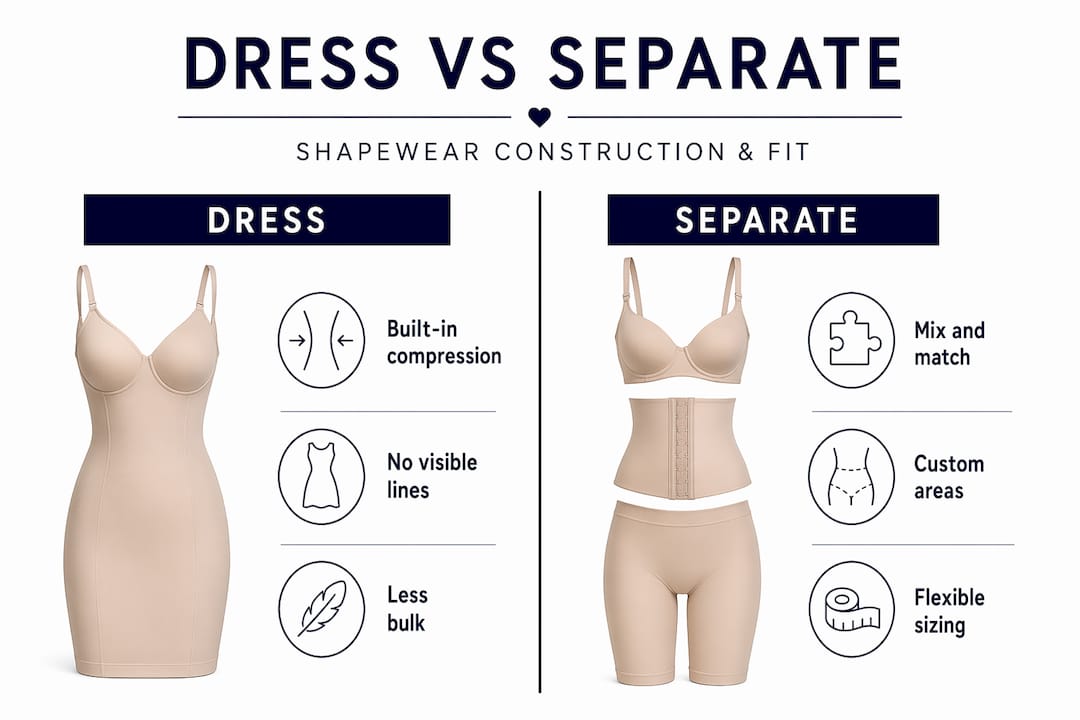
The biggest difference between a shapewear dress and a separate piece is how the shaping layer is built into the garment. A shapewear dress has dual-layer construction with an outer fashion fabric and a hidden compression lining sewn directly inside. You get one garment doing two jobs. There is no second waistband sitting at your midsection, no extra fabric folding over itself, and no separate hem riding up your thighs.
Separates work differently. You put on a bodysuit, shorts, or high-waist shaper first, then dress over it. That sounds simple, but in practice you are managing two garments with two sets of compression panels, two waistbands, and two hem edges. Each of those points is a potential problem area.
Common fit issues with separates include:
- Rolling waistbands: Usually caused by wearing a size too small or a shaper without a silicone grip band at the top edge.
- Bunching fabric: A sign the garment is too large or the compression is too light to hold the fabric flat.
- Skin chafing: Poor quality seams on the inner garment rub against skin during movement, especially at the thigh hem.
- Shifting panels: Without silicone leg grippers, separate shorts or bodysuits creep upward throughout the day.
According to fit guidelines, common shapewear failures like rolling waistbands and bunching are almost always tied to incorrect sizing rather than the shapewear itself being uncomfortable. That is a key distinction. The garment is not the problem. The fit is.
Pro Tip: When sizing shapewear separates, measure your natural waist and the fullest part of your hips. If your measurements fall between sizes, go up. A slightly looser fit stays in place far better than one that is too tight and fights your body all day.
One more thing worth knowing about fit: torso length matters a lot for full-body shapers and bodysuits. If the torso is too short, the crotch seam pulls down on the shoulder straps and creates constant tension. Shapewear dresses avoid this problem entirely because the shaping layer is cut to match the dress length from the start.
Comfort, breathability, and compression levels
This is where shapewear dresses pull ahead for most everyday situations. Because the compression lining is built in, there is simply less fabric touching your skin. Reduced fabric layers in built-in shapewear dresses allow more airflow and significantly less heat buildup compared to wearing a separate shaper underneath a dress. If you have ever felt overheated at a summer wedding or a long dinner, you already know how much that extra layer costs you in comfort.
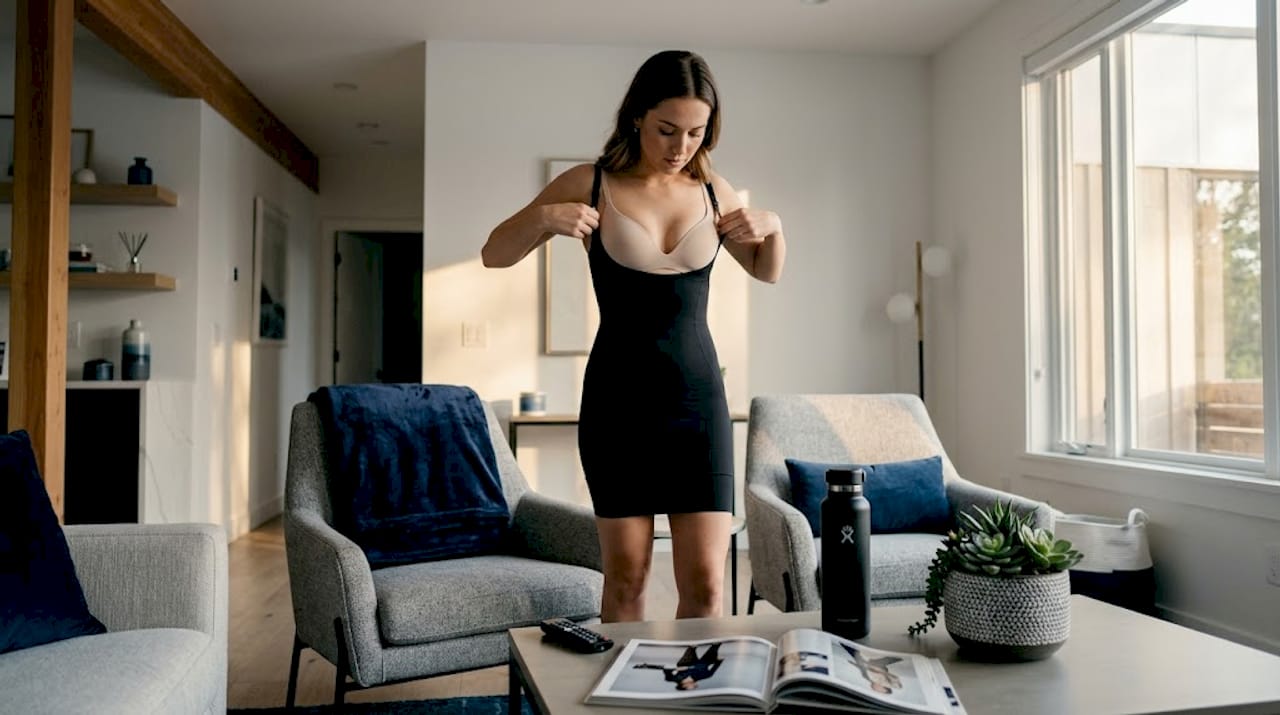
Here is a side-by-side look at how the two options compare across key comfort factors:
| Comfort factor | Shapewear dress | Separate shapewear |
|---|---|---|
| Heat and breathability | Better airflow, fewer layers | More heat, two fabric layers |
| Shifting and movement | Silicone grips hold lining in place | Can shift without grip bands |
| Waistband pressure | No separate waistband | Second waistband can dig in |
| Fabric feel on skin | Single smooth lining | Two garments, potential friction |
| Ease of bathroom use | Depends on dress style | Easier with open-gusset designs |
Compression level is a separate conversation from style. High compression shapewear is designed for shorter wear times and special events. It is not meant to be worn for eight hours straight. If you are shopping for something to wear all day at work or on a long travel day, light to medium compression is the smarter pick. It still smooths and supports without restricting your breathing or making you feel squeezed by hour three.
Separates do have one comfort advantage worth mentioning. Because you choose the shaper independently, you can match the compression level precisely to the area you want to target. Want firm control at the waist but lighter compression at the thighs? You can find a separate piece built exactly that way. A shapewear dress gives you whatever compression level the designer built in, which may not always match your specific needs.
Pro Tip: For all-day events like weddings or long work days, look for shapewear dresses made with modal or bamboo blends. These fabrics are naturally moisture-wicking and feel noticeably softer against skin than standard nylon-spandex blends.
Real-world testing matters more than quick try-ons. Extended wear testing over weeks reveals far more about comfort and staying power than a five-minute fitting room check. If you can, wear a new piece around the house for a few hours before committing to it for a big event.
When to choose a dress versus separates
The right pick really comes down to your outfit, your occasion, and how much flexibility you want in your wardrobe.
Built-in shapewear dresses shine in these situations:
- Formal events and weddings: You want a smooth, polished look with zero visible lines. A shapewear dress handles everything in one piece.
- Bodycon or fitted silhouettes: The compression lining is cut to match the dress shape, so there is no extra fabric fighting the outer layer.
- Hot weather occasions: Fewer layers means staying cooler and more comfortable for longer.
- Postpartum dressing: A dress with gentle built-in support offers comfort and coverage without the pressure of a separate waistband sitting on a sensitive midsection. Options like postpartum recovery shorts can also complement your wardrobe for days when you want separates.
Separates make more sense in these cases:
- You already own dresses you love: Separates let you add shaping to any outfit in your existing wardrobe without buying new pieces.
- You want to mix and match shaping levels: Wear firm control one day, light smoothing the next, using the same outer dress.
- Strapless or backless styles: Some shapewear separates are designed specifically to work under strapless or backless dresses where a built-in lining would show.
- Budget flexibility: One good separate shaper can work under multiple outfits, which can be more cost-effective than buying several shapewear dresses.
Separate shapewear options offer real flexibility for mixing shaping areas, but they do increase fabric bulk and visible lines under certain dress styles. Knowing your outfit first makes the decision much easier.
How to test fit before you commit
Accurate body measurement is your starting point. Measure your natural waist, the fullest part of your hips, and your torso length from shoulder to crotch for full-body pieces. Sizing to actual measurements rather than your regular clothing size is the single most reliable way to avoid fit problems. Shapewear sizing charts are built around body measurements, not dress sizes.
Once you have the garment on, run through these steps before deciding it fits:
- Stand and check the waistband. It should lie flat with no digging or rolling. If it folds over itself, the size is too small.
- Sit down for at least five minutes. This is the most revealing test. A 5-minute sit test catches rolling, pinching, and panel shifting that never shows up when you are standing still.
- Walk across the room. Watch for the hem riding up or the waistband shifting down. Movement reveals what standing still hides.
- Stretch and bend. Reach your arms overhead and bend at the waist. You should be able to breathe comfortably and move without the garment pulling or restricting.
- Check for transparency. Put on the outer dress or pants you plan to wear and look for visible lines, seams, or color showing through the fabric.
- Take a full breath. If you cannot take a deep breath without feeling squeezed, the compression level is too high for the length of time you plan to wear it.
Any rolling, bunching, or breathing difficulty is a sign to try a different size or a lower compression level. It is not a sign that shapewear is not for you.
My honest take on the whole debate
I have spent a lot of time looking at how people actually experience shapewear versus how they expect to experience it. Here is what I have found: most people who say shapewear is uncomfortable have been wearing the wrong size or the wrong compression level for the occasion. That is almost always the real story.
Built-in shapewear dresses surprised me. I expected them to feel restrictive or stiff, the way a lot of shapewear separates do when you first put them on. They do not. When the fit is right, a well-made shapewear dress feels like a regular dress that happens to hold everything smoothly in place. The absence of a second waistband is genuinely noticeable.
That said, I would not write off separates entirely. For someone who wants to add shaping to a wardrobe they already love, or who needs very specific compression targeting, separates are worth the extra effort. The key is doing the real fit work: measuring accurately, testing movement, and wearing the piece for more than five minutes before deciding it works.
What I have learned is that the quick try-on is almost useless. You need to sit, walk, and breathe in shapewear to know whether it actually fits your life. The people who love their shapewear are the ones who took that time.
— I
Find your fit at Ilovenichewear
Now that you know what to look for, finding the right piece gets a lot easier. At Ilovenichewear, you will find shapewear dresses and separates built with the features that actually matter: silicone grip bands to prevent shifting, breathable fabric blends for all-day comfort, and multiple compression levels so you can match the garment to the occasion. The full shapewear collection includes detailed sizing guides to help you measure correctly and pick the right fit the first time. Whether you are dressing for a formal event, everyday wear, or postpartum recovery, there is something here that fits your life. Shop now and enjoy free shipping on all orders!
FAQ
What is the main difference between a shapewear dress and separates?
A shapewear dress has a compression lining built directly into the garment, while separates are standalone shaping pieces worn underneath any outfit. The built-in option reduces fabric bulk and eliminates a second waistband.
Which is more comfortable for all-day wear?
Built-in shapewear dresses tend to be more comfortable for extended wear because they have fewer fabric layers and less heat buildup. Light to medium compression in either style works better than high compression for all-day use.
How do I know if my shapewear fits correctly?
Sit for five minutes, walk, and stretch after putting it on. If the waistband rolls, the fabric bunches, or you cannot take a full breath, the size or compression level is not right for your body.
Can separates work under any dress style?
Most separates work under a wide range of styles, but strapless or backless dresses may require specially designed pieces. Separates also add bulk under very fitted silhouettes, which can create visible lines.
Should I size up or down in shapewear?
Always size based on your actual body measurements, not your regular clothing size. If your measurements fall between two sizes, go up. A slightly larger size stays in place and feels more comfortable than one that is too tight.