
Choosing shapewear that actually works comes down to one thing: the fabric. Most people focus on style or price, but the real difference between shapewear that feels like a second skin and one you can’t wait to take off is the material technology underneath. Shapewear fabric technology examples range from classic spandex blends to smart textiles that respond to your body heat. Understanding what each fabric does, and why, helps you shop smarter and feel more comfortable all day long. This guide breaks it all down for you.
Table of Contents
- Key takeaways
- What shapewear fabric technology examples actually mean
- 1. Spandex and Lycra blends
- 2. Microfiber nylon
- 3. Power mesh fabric
- 4. Modal and cellulose-based fibers
- 5. Air-covered nylon-spandex yarn
- 6. Seamless knitting with multi-gauge tension zones
- 7. High-grip elastane with silicone finishes
- 8. Advanced finishing treatments
- 9. Eco-friendly and recycled performance fabrics
- 10. Smart and thermal-responsive fabrics
- My honest take on shapewear fabrics in 2026
- Explore shapewear built with real fabric technology at Ilovenichewear
- FAQ
Key takeaways
| Point | Details |
|---|---|
| Fabric weight drives compression | Shapewear fabrics typically range 200–300 GSM to deliver real hold without sacrificing comfort. |
| Spandex dominates the market | Nearly 47% of shapewear products are spandex-based, making it the most widely used shaping fiber. |
| Seamless knitting targets zones | 3D knitting with variable stitch densities creates targeted compression zones for a more comfortable, body-specific fit. |
| Sustainability is growing fast | Over 60% of new shapewear developments now incorporate eco-friendly textiles driven by consumer demand and regulations. |
| Smart fabrics are the next step | Thermal regulation and moisture-responsive textiles represent the near future of shapewear performance. |
What shapewear fabric technology examples actually mean
Before you can compare fabrics, you need to know what makes one better than another. Shapewear fabric technology explained simply means: how a material is engineered to compress, support, breathe, and hold its shape over time. These are the core criteria you should use to evaluate any shapewear fabric.
Compression and recovery. Fabric weight, measured in GSM (grams per square meter), is one of the most reliable indicators of compression power. Shapewear fabrics typically range 200–300 GSM to balance hold and recovery. Higher GSM means more structure, but it also means more heat and less flexibility.
Breathability and moisture management. Nobody wants to overheat in shapewear. Fabrics that wick sweat away from your skin and allow airflow make a huge difference in how long you can wear a piece comfortably.
Durability. Good shapewear should hold its elasticity through dozens of wash cycles. Fabrics that lose their stretch quickly are a waste of money, no matter how good they feel on day one.
Seamless construction. The way fabric is knitted or woven affects how it moves with your body. Seamless designs eliminate chafing and visible lines under clothing.
Sustainability. 42% of consumers now prioritize breathable or sustainable fabrics when shopping for shapewear. Eco-conscious materials are no longer a niche preference. They’re becoming a baseline expectation.
Pro Tip: When checking a shapewear label, look for the elastane percentage. Anything between 20–25% elastane in a polyamide blend gives you the sweet spot of stretch, recovery, and durability.
1. Spandex and Lycra blends
Spandex, often sold under the brand name Lycra, is the foundation of most shapewear on the market today. It can stretch up to five times its original length and snap back without losing shape. That recovery power is what gives shapewear its sculpting ability.
In shapewear, spandex is almost never used alone. It’s blended with nylon or polyester to add structure and reduce cost. The ratio matters a lot. A fabric with only 10% spandex feels stretchy but won’t hold much. A blend with 20–25% elastane, like the recommended polyamide blend of 75–80% polyamide and 20–25% elastane, gives you real compression with lasting recovery.
Lycra specifically is a trademarked elastane fiber known for its consistent quality and durability. Brands that use Lycra-certified fabric are signaling a commitment to performance that generic spandex blends don’t always match.
2. Microfiber nylon
Microfiber nylon is one of the best shapewear fabrics for everyday wear. The fibers are extremely fine, which creates a fabric that feels incredibly soft against your skin while still being strong enough to provide light to moderate compression.
What makes microfiber nylon stand out is its moisture-wicking ability. The tiny fibers pull sweat away from your skin quickly, which keeps you dry and comfortable even during long wear. It’s also lightweight, which makes it a great choice for shapewear worn under fitted clothing where you don’t want bulk.
The downside is that microfiber nylon alone doesn’t offer heavy compression. It works best in shapewear designed for smoothing rather than serious sculpting. Think bodysuits, slip shorts, and light control camisoles.
3. Power mesh fabric
Power mesh is one of the most recognizable shapewear fabric types. You’ve seen it: the open-weave, net-like fabric used in the panels of control briefs and shaping shorts. It looks delicate, but it’s actually one of the strongest shaping materials available.
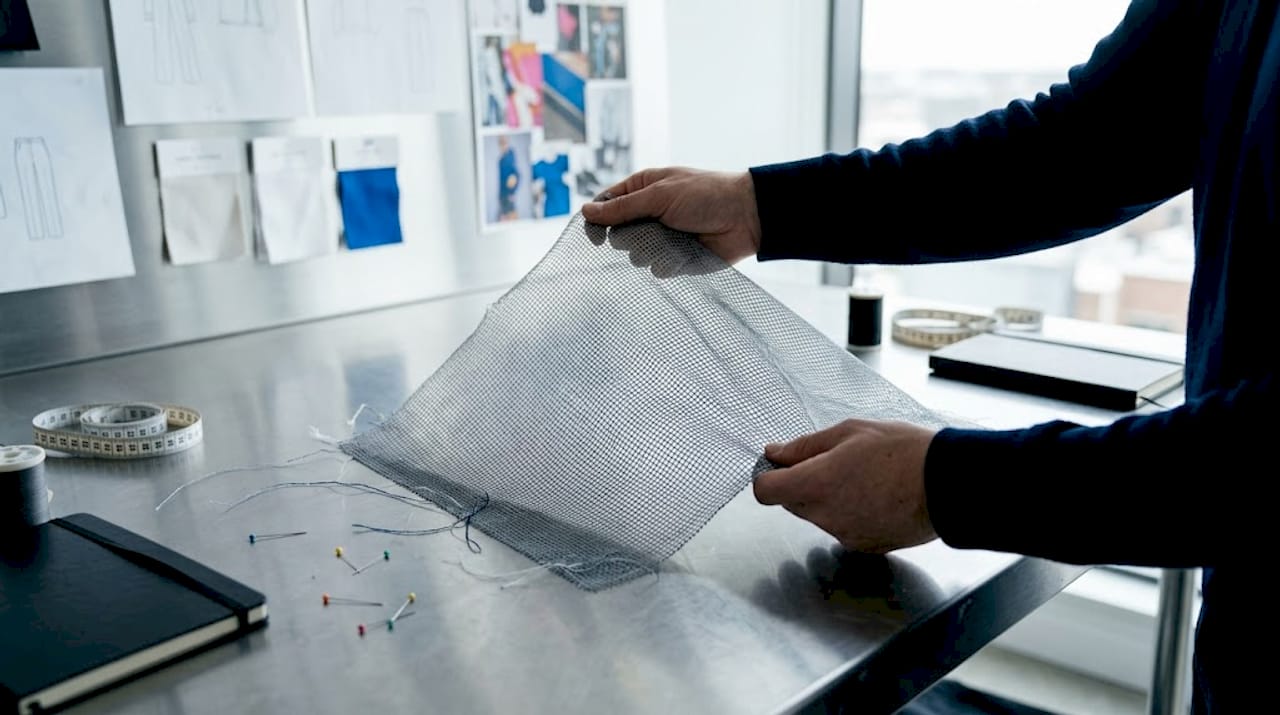
The open structure of power mesh does two things at once. It provides firm, targeted compression in specific zones, and it allows air to circulate, which is why it’s one of the best examples of breathable shapewear fabrics. Garments that use power mesh panels in the tummy or thigh area can offer serious shaping without trapping heat.
Power mesh is typically made from nylon and spandex, which gives it strength and stretch. It’s also thin enough to layer under other fabrics without adding visible bulk.
4. Modal and cellulose-based fibers
Modal is a semi-synthetic fiber made from beech tree pulp. It’s softer than cotton, more breathable than most synthetics, and has a natural moisture-wicking ability that makes it genuinely comfortable against skin for hours at a time.
In shapewear, modal is often blended with spandex to add the stretch needed for compression. Modal combined with air-texturing improves breathability and moisture management significantly, addressing one of the biggest complaints about synthetic shapewear: overheating. This makes modal blends a strong choice for anyone who runs warm or lives in a humid climate.
Modal is also more sustainable than most synthetics. Beech trees require no irrigation and regenerate naturally, making modal a lower-impact fiber compared to petroleum-based materials.
Pro Tip: If you tend to overheat in shapewear, look for products that list modal or bamboo fiber on the label. These natural-based fibers breathe noticeably better than pure nylon or polyester blends.
5. Air-covered nylon-spandex yarn
This is where shapewear fabric technology gets genuinely interesting. Air-covered yarn is made by wrapping a spandex core with nylon fibers using an air-jet process, rather than traditional mechanical twisting. The result is a yarn that’s smoother, softer, and more breathable than standard covered yarn.
Air-covered nylon-spandex yarn delivers softness, breathability, chlorine resistance, and long-lasting elasticity. It’s commonly used in lingerie and swimwear, but it’s increasingly showing up in premium shapewear because it holds its stretch exceptionally well over time without becoming rough or scratchy.
This yarn type is a great example of how shapewear performance fabrics are evolving beyond simple fiber blends into engineered constructions that deliver multiple benefits at once.
6. Seamless knitting with multi-gauge tension zones
Seamless shapewear isn’t just about removing seams. The real technology is in how the fabric is knitted. Seamless shapewear uses 3D knitting with variable stitch densities and yarn tensions to create targeted compression zones in a single continuous garment.
This means one piece of fabric can be firm at the waist, gentler at the hips, and barely there at the thighs, all without panels or seams. The result is shapewear that feels like it was made for your body specifically, because the compression is placed exactly where you need it.
Advanced seamless knitting also allows for personalized body-shape-specific designs with tension zones adapted to different body types. This is one of the most exciting areas of advanced shapewear design right now.
7. High-grip elastane with silicone finishes
One of the most frustrating shapewear problems is roll-down. The waistband folds over, the legs ride up, and you spend the day adjusting. High-grip elastane blends and silicone-lined edges solve this directly.
Silicone grip strips bonded to the interior of waistbands and leg openings keep the garment in place without adding bulk or discomfort. Targeted compression with anti-slip silicone lining is now considered a best practice in shapewear design because it dramatically improves wearability without increasing compression levels.
You can also find this technology in accessories. The anti-chafe thigh straps at Ilovenichewear use high-elasticity silicone to stay put all day, which is the same principle applied to a standalone product.
8. Advanced finishing treatments
The fabric itself is only part of the story. What happens to it after knitting, the finishing treatments applied, changes how it performs on your body. Advanced finishing processes like antimicrobial treatments, UPF protection, and softening agents are now standard in higher-end shapewear fabrics.
Antimicrobial finishes reduce odor-causing bacteria, which matters a lot when you’re wearing a compression garment for eight or more hours. Softening treatments make fabrics that would otherwise feel stiff or scratchy feel smooth and comfortable from the first wear. UPF finishes add sun protection, which is relevant for shapewear worn as outerwear or under sheer clothing.
9. Eco-friendly and recycled performance fabrics
Over 60% of new shapewear developments now incorporate eco-friendly textiles. This isn’t just a marketing trend. Regulations in North America and Europe are pushing brands toward recycled materials and lower-impact production methods.
Recycled nylon (often made from discarded fishing nets or fabric scraps) and recycled polyester are increasingly used in shapewear blends. They perform comparably to virgin synthetics while significantly reducing environmental impact. Bamboo fiber is another popular sustainable option, offering natural softness and breathability similar to modal.
The bamboo fiber underwear at Ilovenichewear is a good example of how sustainable fibers show up in everyday comfort wear, not just specialty products.
10. Smart and thermal-responsive fabrics
This is the frontier of shapewear technology trends. Smart textiles that respond to body heat, moisture levels, or movement are moving from research labs into retail products. Thermal regulation and biometric sensing represent genuine next-generation directions for shapewear fabrics.
Some smart fabrics use phase-change materials that absorb heat when you warm up and release it when you cool down, keeping your body temperature more stable. Others use conductive fibers that can track biometric data. For everyday shapewear, the most practical near-term application is thermal regulation, which makes garments more comfortable across a wider range of temperatures and activity levels.
Comparing the key fabric technologies at a glance
| Fabric Type | Compression Level | Breathability | Durability | Sustainability |
|---|---|---|---|---|
| Spandex/Lycra blend | High | Moderate | High | Low to moderate |
| Microfiber nylon | Light to moderate | High | Moderate | Low |
| Power mesh | High (targeted) | High | High | Low |
| Modal blend | Light to moderate | Very high | Moderate | High |
| Air-covered nylon-spandex | Moderate to high | High | Very high | Moderate |
| Recycled nylon/polyester | Moderate to high | Moderate | High | Very high |
My honest take on shapewear fabrics in 2026
I’ve spent a lot of time looking at how shapewear fabrics perform in real life versus how they’re marketed, and the gap is often surprising. The most common mistake I see is people equating tightness with effectiveness. A garment that squeezes uncomfortably isn’t working better. It’s just working harder in the wrong way.
Effective compression depends more on fabric weight and construction quality than on how snug a garment feels when you first put it on. The best shapewear I’ve come across uses targeted zones, not uniform pressure across the whole body. That approach is both more comfortable and more effective at shaping specific areas.
What I find genuinely exciting right now is the convergence of sustainability and performance. Modal blends and recycled nylon used to feel like compromises. Now they’re often better than the conventional alternatives. If you’re shopping for shapewear today, I’d prioritize fabrics that offer breathability and targeted compression over anything that just feels tight. Your body will thank you after hour four.
— I
Explore shapewear built with real fabric technology at Ilovenichewear
If you’ve been searching for shapewear that actually puts these fabric technologies to work, Ilovenichewear has you covered. The shapewear collection features pieces built with breathable, comfortable materials designed for real all-day wear, not just a few hours.
Whether you’re looking for postpartum support, everyday smoothing, or something that works under your favorite outfit, you’ll find options that prioritize both comfort and structure. The postpartum seamless shapewear is a great starting point if you want to experience seamless knitting technology firsthand. And if you want to explore the full range of what modern fabric technology feels like on your body, browse Ilovenichewear and find your fit today.
FAQ
What fabrics are most common in shapewear?
Spandex and nylon blends dominate the shapewear market, with 47% of products being spandex-based. Power mesh, microfiber nylon, and modal blends are also widely used depending on the compression level and comfort needs.
How does seamless shapewear technology work?
Seamless shapewear uses 3D knitting with variable stitch densities to create different compression zones in one continuous garment, eliminating seams and targeting shaping where you need it most.
What is the best shapewear fabric for breathability?
Modal blends and power mesh are among the best examples of breathable shapewear fabrics. Modal with air-texturing improves airflow and moisture management, making it ideal for all-day wear in warmer conditions.
Does tighter shapewear mean better shaping?
No. Fabric weight (GSM) and construction quality matter more than tightness. Excessive compression can limit comfort and even restrict movement, while targeted compression zones deliver better results with less strain on your body.
Are eco-friendly shapewear fabrics as effective as synthetic ones?
Yes, in most cases. Recycled nylon and modal blends now perform comparably to conventional synthetics, and over 60% of new shapewear developments incorporate eco-friendly textiles without sacrificing compression or durability.