
Nursing clothing is defined as apparel specifically designed to support either breastfeeding access for new parents or functional, hygienic performance for clinical healthcare staff. Both uses share a common thread: purpose-built design that makes a physically demanding role easier. For breastfeeding parents, nursing wear features hidden panels, drop-down cups, and stretch fabrics that allow feeding without fully undressing. For clinical staff, it means scrubs engineered with 2–5% elastane blends for mobility, moisture management, and infection control. This guide covers both contexts, so you can find exactly what you need.
What is nursing clothing for breastfeeding parents?
Nursing clothing for breastfeeding parents is any garment built with concealed access points that let you feed or pump without removing your top. The core design principle is one-handed access. You should be able to open a panel, unclip a cup, or pull aside a layer while holding your baby with the other arm.
The main types of nursing apparel for mothers include:
- Nursing tops and shirts: Feature hidden inner layers or side slits that expose only the breast, keeping your stomach and back covered.
- Nursing bras: Come in clasp, cross-over, and pull-aside styles. Nursing bra designs vary widely, so testing one-handed access before buying is the single most important step.
- Nursing dresses: Built with wrap-style fronts or discreet zippers, these work well for outings and postpartum events where you want to look put-together.
- Nursing sweaters: Cozy, flowy options like the nursing sweater styles at Ilovenichewear use layered hems or side openings to keep you warm while feeding.
- Nursing tanks and camis: Worn under regular tops, these act as a base layer with built-in bra support and drop-down cups.
The coverage factor matters more than most parents expect. Nursing-specific clothing reduces friction and allows discreet feeding without removing clothes entirely. That means less skin exposure, less anxiety in public, and faster feeding sessions.
Fabric matters too. Stretch blends with cotton or modal keep garments soft against postpartum skin. Breathable, light fabrics prevent overheating during long nursing sessions, which is a real comfort issue many parents underestimate.
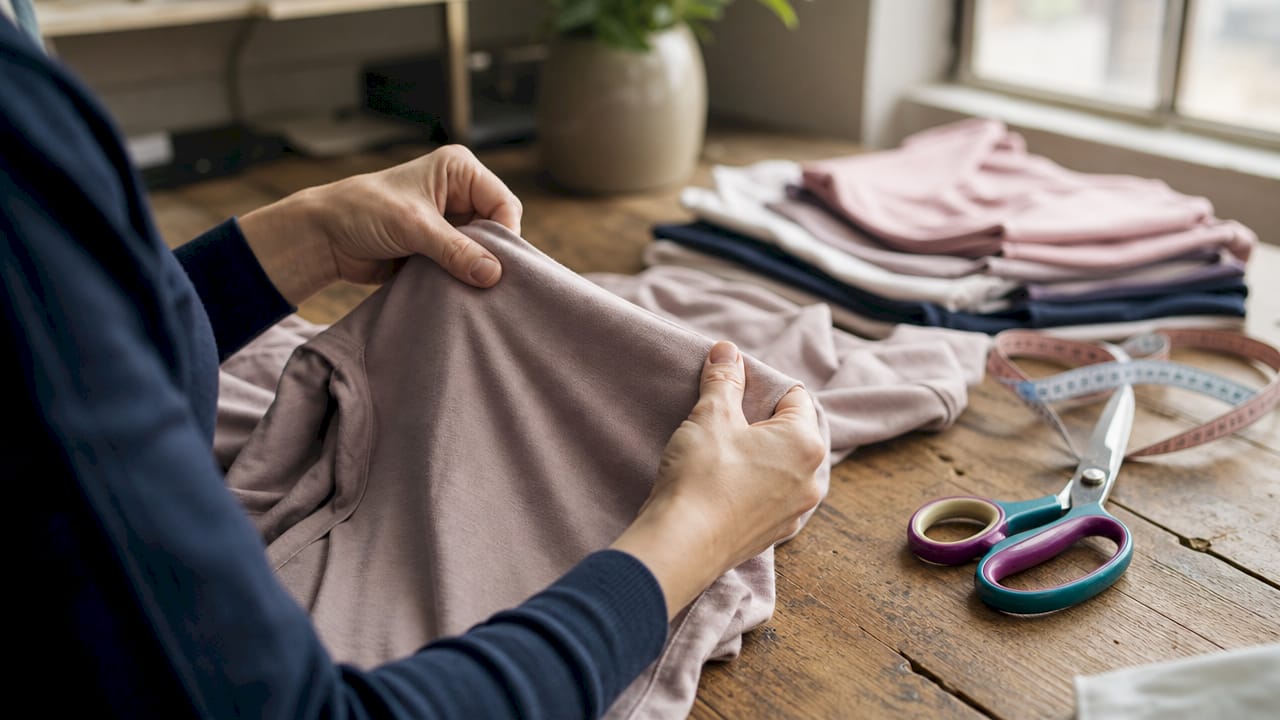
Pro Tip: Before buying any nursing top, slip one arm through the sleeve and try to open the access panel with just that hand. If you struggle in a dressing room, you will definitely struggle at 3 AM with a hungry baby.
How does nursing clothing function in healthcare settings?
Clinical nursing clothing is defined as sanitary, easy-to-clean uniforms worn by healthcare staff during patient care. The standard set includes short-sleeve V-neck shirts and loose pants or dresses, built for a full shift of bending, lifting, and moving between rooms. These are commonly called scrubs.
Scrubs serve four functions: mobility, hygiene, infection control, and professional presentation. Fabric blends drive all four. Modern clinical scrubs use polyester, rayon, and spandex combinations that provide durability, stretch, moisture-wicking, and antimicrobial benefits. That combination is considered the gold standard for medical apparel because it handles both physical demands and sanitation requirements.
| Feature | Purpose | Common Standard |
|---|---|---|
| 2–5% elastane content | Stretch and seam durability | Prevents tears during physical tasks |
| Moisture-wicking fabric | Keeps staff dry during long shifts | Polyester/rayon blends |
| Color-coded scrubs | Department or role identification | Set by individual institutions |
| Short sleeves | Infection control compliance | Reduces surface contact with patients |
| Easy-clean material | Hygiene maintenance | Machine washable at high temperatures |
Healthcare dress codes mandate that scrubs be neat, modest, and free of rips. Many institutions color-code by department so patients can quickly identify who is caring for them. Some organizations go further and provide scrub allocation funds to help staff replace worn or non-compliant garments. That institutional support reflects how seriously clinical settings treat uniform standards.
Pro Tip: If your hospital assigns a specific scrub color, buy two extra sets at the start of your contract. Stains happen fast in clinical environments, and having backup sets prevents last-minute uniform scrambles before a shift.
Proper nursing attire for clinical staff also affects patient perception. Cleanliness, fit, and dress code adherence contribute directly to how patients assess the professionalism of their care team. A well-fitted, clean uniform signals competence before a word is spoken.
What are the benefits of specialized nursing clothing for breastfeeding parents?
The primary benefit of nursing apparel for mothers is reduced friction during feeding. Friction here means anything that slows you down or creates discomfort: lifting a regular shirt, fumbling with a bra clasp, or exposing more skin than you want to in a public space.
Nursing-specific clothing eliminates the need to lift shirts or expose skin, which reduces anxiety and speeds up feeding. That speed matters more than it sounds. A newborn feeds 8–12 times per day. Shaving even two minutes off each session adds up to real time saved.
The benefits extend to workplace pumping as well. Nursing tops with discreet access panels let parents pump at work without fully undressing in a bathroom or pumping room. That privacy supports breastfeeding continuation for working parents who might otherwise stop earlier than they planned.
“Nursing clothes are not medically required, but they are a genuine convenience tool, especially for managing breast pads and easing the anxiety of public feeding. The right garment removes one more barrier between a parent and a successful feeding session.”
International Board Certified Lactation Consultant, via breastfeeding.support
Nursing clothing also helps with milk leakage management. Nursing-specific garments are designed to accommodate breast pads discreetly, keeping you comfortable and dry during the early postpartum weeks when leakage is most unpredictable.
What fabrics and design features matter most in nursing clothing?
The best nursing clothes in 2026 combine soft, breathable base fabrics with performance-enhancing blends. For breastfeeding apparel, cotton-rich or modal fabrics sit closest to the skin and feel gentle against sensitive postpartum tissue. For clinical scrubs, polyester-dominant blends handle the durability and hygiene demands of a hospital environment.
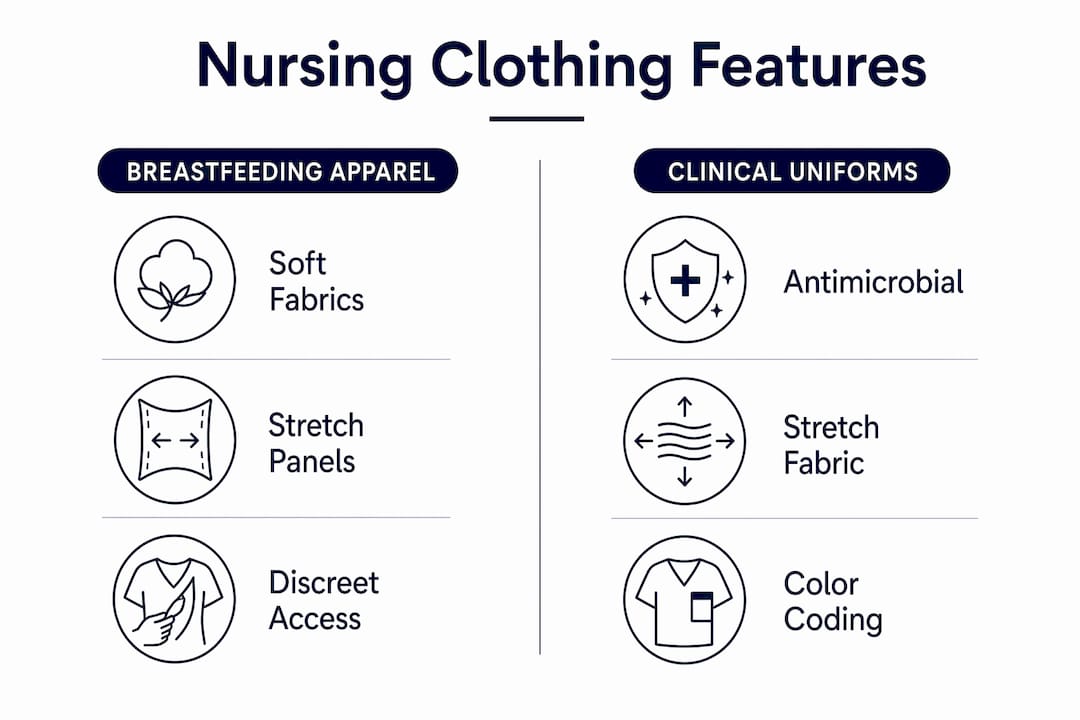
Fabric blends with elastane provide stretch without losing shape over repeated washes. That matters for both groups. A nursing bra that loses its structure after ten washes stops providing the support it was designed for. A scrub that loses its stretch after a month of hospital laundry becomes uncomfortable and unprofessional.
| Fabric Type | Best For | Key Benefit |
|---|---|---|
| Cotton/modal blend | Breastfeeding apparel | Soft, breathable, gentle on skin |
| Polyester/rayon/spandex | Clinical scrubs | Durable, moisture-wicking, antimicrobial |
| Cotton/elastane blend | Nursing bras and tanks | Stretch with shape retention |
Design features to look for in breastfeeding apparel include concealed access panels, stretch zones at the sides, and adjustable straps. Underwire bras are discouraged during breastfeeding because they can cause plugged ducts and discomfort as breast size changes rapidly in the postpartum period. Soft-cup nursing bras with wide, adjustable bands are the safer, more comfortable choice.
For clinical nursing clothing, look for shapewear fabric technology that incorporates antimicrobial treatments. These treatments reduce odor and bacterial buildup during long shifts, which is a genuine hygiene benefit in patient-facing roles.
How to choose and care for nursing clothing
Choosing the right nursing wear comes down to testing before committing. Follow these steps to avoid buying garments that look good but fail in practice:
- Test one-handed access first. Whether it is a nursing bra clasp or a top’s hidden panel, open it with one hand while your other arm is occupied. If it takes two hands, it will frustrate you during actual feeding.
- Check the coverage. Put the garment on and use the access point. Look in a mirror. You should see only what you intend to expose, nothing more.
- Assess the fabric feel. Rub the fabric against the inside of your wrist. If it feels scratchy there, it will feel worse against postpartum skin or after a long shift.
- Verify washing instructions. Nursing clothing gets washed frequently. Choose garments rated for machine washing at warm temperatures. Delicate-only items are impractical for daily nursing or clinical use.
- Buy for your current size, not your pre-pregnancy size. Breast size changes significantly postpartum. A nursing bra that fits at week two may not fit at week eight. Consider buying two sizes and returning the one that does not fit.
Caring for nursing clothing extends its life significantly. Wash nursing bras in a mesh laundry bag on a gentle cycle to protect the clasps and fabric structure. For clinical scrubs, follow your institution’s laundering guidelines, which often specify high-temperature washing for infection control. Avoid fabric softeners on moisture-wicking scrubs, as they coat the fibers and reduce the wicking effect over time.
Pro Tip: Air-dry nursing bras whenever possible. High dryer heat degrades elastic faster than almost anything else, and a stretched-out nursing bra loses both support and its one-handed clasp function.
For postpartum parents who want garments that work double duty, nursing-friendly shapewear offers abdominal support alongside breastfeeding access. That combination addresses two postpartum needs in one garment.
Key Takeaways
Nursing clothing is purpose-built apparel that solves a specific physical problem, whether that is breastfeeding access for parents or mobility and hygiene for clinical staff.
| Point | Details |
|---|---|
| Dual definition | Nursing clothing covers both breastfeeding apparel and clinical scrubs, each with distinct design goals. |
| One-handed access | The most critical feature in breastfeeding apparel is the ability to open access points with a single hand. |
| Fabric drives function | Elastane blends give clinical scrubs stretch; cotton or modal blends keep breastfeeding garments soft and breathable. |
| Avoid underwire | Soft-cup nursing bras reduce the risk of plugged ducts and discomfort during rapid postpartum breast changes. |
| Test before buying | Try every access mechanism in-store or at home before committing to any nursing top, bra, or dress. |
Why nursing clothing deserves more credit than it gets
Most conversations about breastfeeding focus on technique, latch, and milk supply. The clothing question gets treated as an afterthought. That is a mistake I have seen play out repeatedly. A parent who struggles to feed discreetly in public often stops breastfeeding earlier than they planned, not because of a biological barrier but because the friction of managing regular clothing in a public space felt like too much.
The right nursing outfit removes that friction entirely. You stop thinking about your clothes and start focusing on your baby. That shift sounds small, but it is genuinely significant in those early weeks when everything feels hard.
On the clinical side, I think healthcare institutions underestimate how much a well-fitted, comfortable scrub affects staff performance. A nurse who spends a 12-hour shift in scrubs that pull at the seams or trap heat is dealing with a low-level physical distraction all day. Fabric and fit are not vanity concerns in that context. They are functional ones.
The future of nursing apparel in both categories points toward smarter fabric blends and more considered design. Antimicrobial treatments, better elastane ratios, and concealed access points that actually work one-handed are all becoming standard rather than premium features. That is good news for parents and healthcare professionals alike. Prioritizing comfort and function in what you wear is not indulgent. It is practical.
— I
Nursing clothing worth wearing, from Ilovenichewear
Ilovenichewear carries nursing apparel built for real postpartum life, not just the highlight reel.
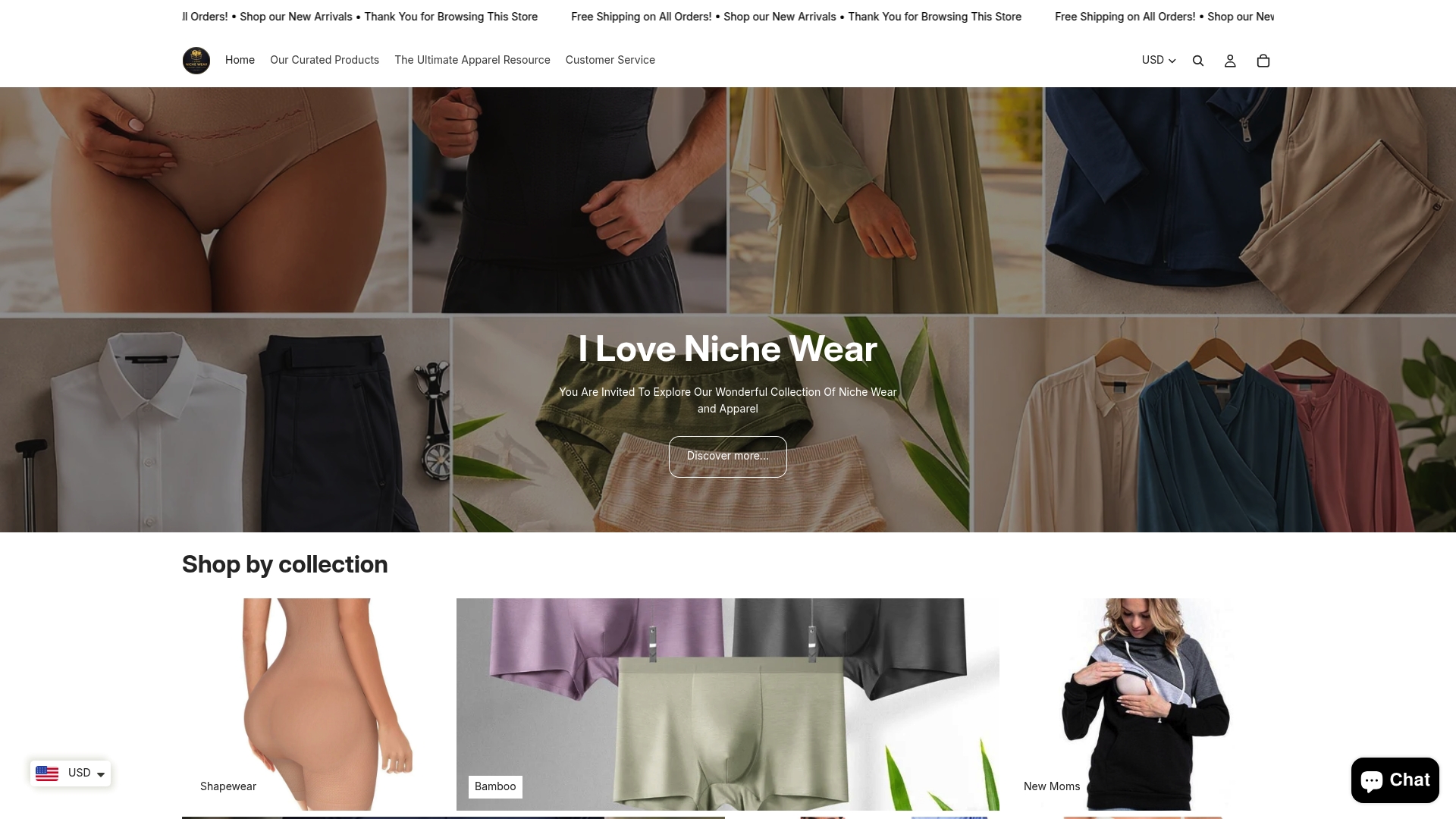
The collection includes cozy nursing sweaters, breathable tops with hidden access panels, and postpartum-friendly options that support your body while making feeding easier. Every piece is chosen with comfort-first fabrics and practical design in mind. Whether you are heading out for the first time with your newborn or settling into a work-from-home pumping routine, there is something in the Ilovenichewear collection that fits your day. Free shipping is available on all orders.
FAQ
What is the nursing wear definition in simple terms?
Nursing clothing is any garment designed to make breastfeeding or clinical nursing duties easier through purpose-built features like access panels, stretch fabrics, or hygienic materials.
Are nursing clothes actually necessary for breastfeeding?
Lactation consultants confirm that nursing clothes are not medically required but offer genuine convenience, especially for managing breast pads and reducing the anxiety of feeding in public or at work.
What types of nursing clothing exist for breastfeeding parents?
The main types include nursing bras, nursing tops, nursing dresses, nursing tanks, and nursing sweaters, all featuring concealed access points for one-handed feeding or pumping.
Why is underwire discouraged in nursing bras?
Underwire bras can cause plugged ducts and discomfort during breastfeeding because breast size changes rapidly postpartum, and rigid underwire creates pressure on milk ducts.
What fabric is best for clinical nursing scrubs?
Polyester, rayon, and spandex blends with 2–5% elastane are the gold standard for clinical scrubs, providing stretch, moisture-wicking, and antimicrobial performance across long shifts.