
Stretch fabric has quietly become one of the most important upgrades in professional clothing. Whether you’re an apparel designer sourcing materials or a professional who spends eight hours a day in a suit, the role of stretch fabric in business wear comes down to one simple truth: you can look polished and move freely. Modern stretch fabrics, built around fibers like spandex (also called elastane or Lycra), polyester blends, and organic cotton, deliver comfort without the rumpled, shapeless look that used to come with it. Performance features like stretch now represent 60–65% of tailored clothing inventory in modern retail, highlighting their market importance.
Here’s a quick look at what stretch fabrics bring to professional attire:
- Freedom of movement without pulling or binding at the shoulders, knees, or seat
- Pressure reduction so garments feel comfortable through long workdays
- Shape retention that keeps trousers creased and blazers structured
- Wrinkle resistance for a polished look from morning meetings to evening events
- Durability that holds up through repeated washing and daily wear
Table of Contents
- How stretch fabrics make your workday more comfortable
- What types of stretch fabrics work best for professional clothing?
- Where stretch fabrics show up in business and workwear garments
- How to care for stretch business wear so it lasts
- What fabric scientists and style consultants say about stretch in office wear
- How stretch fabric business wear compares to traditional business wear
- How stretch fabrics affect your professional appearance and style
- What’s new in stretch fabric technology for business wear
- Sustainability and the environmental side of stretch fabrics
- Key Takeaways
- Stretch-enhanced professional style at Ilovenichewear
How stretch fabrics make your workday more comfortable
The comfort advantage of stretch fabric in professional clothing is real and measurable. When a fabric can give and recover, it reduces the pressure a garment places on your body, especially at high-movement points like the knees, hips, and lower back. Research published in a peer-reviewed textile study confirmed that mechanical stretch properties in men’s suit pants directly reduce garment pressure and improve sensory comfort scores.
Key benefits worth knowing:
- Recovery rate matters most. Fabric recovery below 85% typically causes visible bagging at stress points, which is why quality stretch business wear specifies recovery thresholds, not just stretch percentage.
- Wrinkle resistance is a natural byproduct of polyester-spandex blends, keeping you looking sharp without mid-day touch-ups.
- Shape retention over time means your trousers keep their crease and your blazer keeps its silhouette, even after dozens of washes.
- Durability under daily use is stronger in well-constructed stretch fabrics than in rigid wovens that stress at seam points.
For industrial workwear, the durability benefit is even more pronounced. Stretch fabrics designed for heavy-duty environments handle bending, lifting, and crouching without seam failure, which rigid fabrics simply can’t match.
What types of stretch fabrics work best for professional clothing?
Not all stretch fabrics are built the same, and the differences matter a lot depending on your end use.
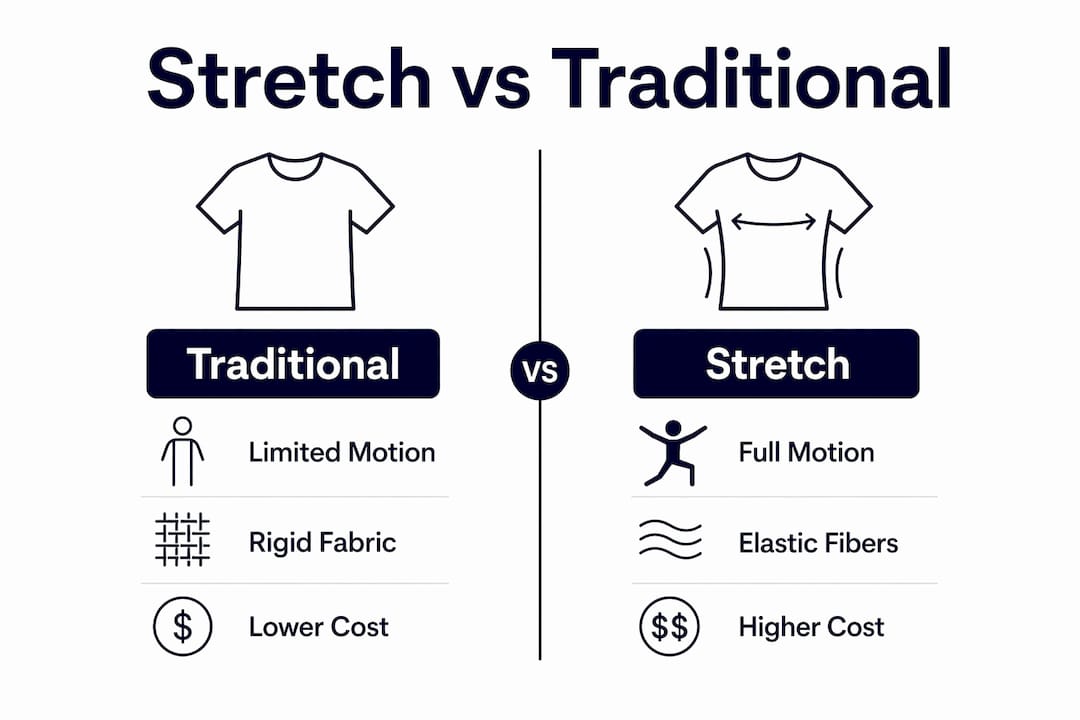
Elastic fiber constructions (spandex/elastane) are the most common. Spandex can stretch up to 5–8 times its original length and return to shape without distortion. In business wear, it’s blended at low percentages with base fibers. The sweet spot for woven office wear is 2–4% spandex; go higher and you risk a rubbery feel and sewing complications. Adding 2–5% spandex to wool preserves the crisp hand feel and drape that tailored suiting demands while giving the wearer real mobility.
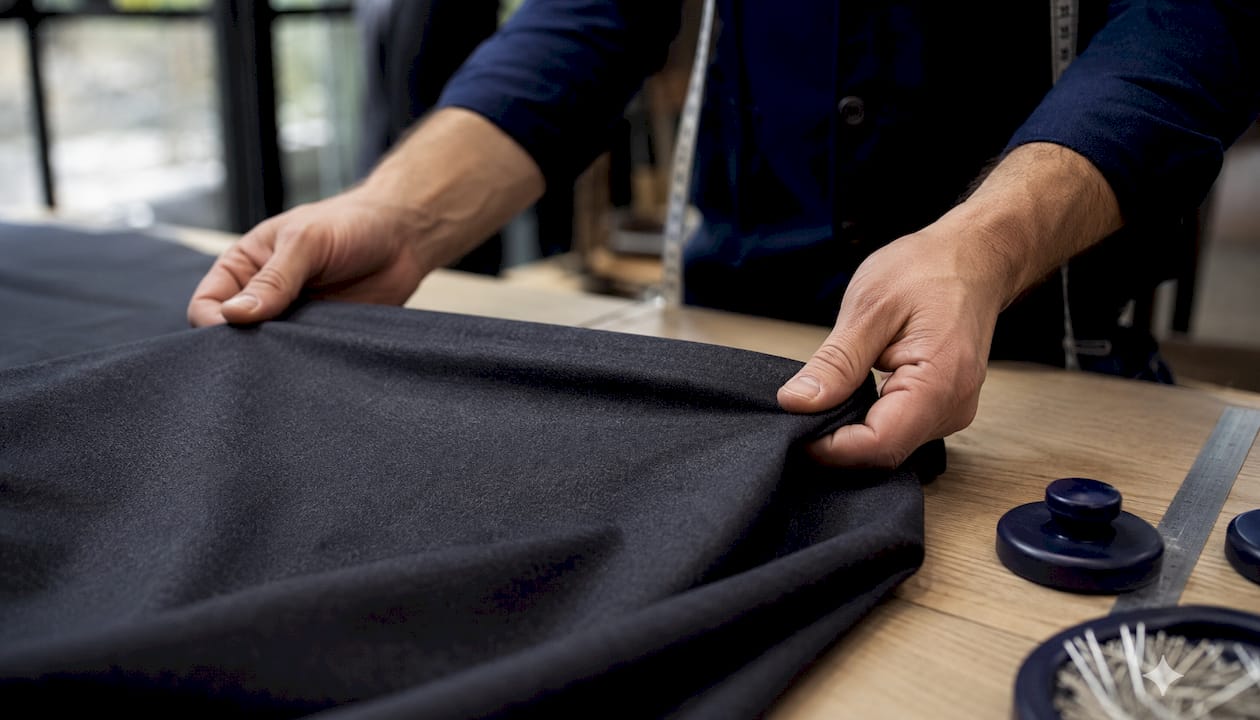
Bicomponent fibers like T400 and EME use a dual-polymer structure to generate stretch without traditional elastic threads. They’re particularly valued in workwear because they resist the chemical degradation that bleach and heat cause in spandex blends.
Mechanical stretch fabrics use high-twist yarns processed through controlled finishing stages to build stretch into the fabric structure itself. Mechanical stretch delivers 10–18% elongation without elastic fiber, which makes it the top choice for uniforms subjected to harsh industrial laundry cycles.
| Fabric Type | Stretch Range | Recovery | Wash Durability | Best For |
|---|---|---|---|---|
| Spandex blend (2–4%) | 2–4% | High (90%+) | Moderate | Office suits, dress pants |
| Wool + spandex (2–5%) | 2–5% | High | Moderate | Tailored suiting |
| Bicomponent (T400/EME) | 2–5% | High | High | Workwear uniforms |
| Mechanical stretch | 10–18% | Moderate | Very high | Industrial uniforms |
- Spandex blends offer the best recovery but need careful laundering
- Mechanical stretch fabrics withstand bleach and heat far better than elastane
- Bicomponent fibers split the difference, offering durability with good recovery
Where stretch fabrics show up in business and workwear garments
The applications span a wider range than most people expect. In tailored office wear, wool-spandex blends appear in suits, dress pants, and skirts where a structured silhouette is non-negotiable. High-density twill stretch fabrics like TRS Gabardine with spandex deliver the crispness a professional garment needs alongside genuine flexibility.
In healthcare, hospitality, and service industries, stretch uniforms let workers move freely through physically demanding shifts without looking disheveled. Industrial workwear takes it further, with stretch ripstop and mechanical stretch twills built for bending, kneeling, and lifting.
Common garment types using stretch fabrics in professional settings:
- Tailored suit trousers and blazers (wool or TR spandex blends)
- Stretch dress pants for office environments
- Fitted skirts and pencil skirts (gabardine spandex)
- Healthcare and service uniforms (TC spandex, 65/35 polyester-cotton + 3–5% spandex)
- Industrial workwear (mechanical stretch or bicomponent ripstop)
- Fitted blazers for travel and client-facing roles
Pro Tip: For business travel capsule wardrobes, TR spandex trousers are a smart pick. They pack without creasing and recover their shape quickly after a long flight.
Recovery performance is what separates a stretch garment that stays professional from one that bags out by noon. Specify recovery rate alongside stretch percentage when sourcing.
How to care for stretch business wear so it lasts
Stretch fabrics reward a little attention at laundry time. Spandex-blend garments are the most care-sensitive, while mechanical stretch fabrics give you more flexibility.
- Wash spandex blends in cool or warm water (below 40°C / 104°F) to protect fiber elasticity
- Skip chlorine bleach on spandex or elastane blends entirely; it degrades the elastic fiber quickly
- Mechanical stretch fabrics handle bleach and higher wash temperatures without the same degradation risk, making them practical for industrial laundering
- Test for shrinkage and recovery after the first few washes; recovery tests after repeated washes confirm whether a fabric will hold its fit integrity over time
- Avoid high-heat drying for spandex blends; air drying or low-heat tumble drying preserves elasticity
- Store stretch garments flat or on wide hangers to prevent distortion at shoulder seams
- Press at the correct temperature — spandex degrades under excessive heat, so always confirm the safe pressing temperature with your fabric supplier
For designers sourcing at scale, build shrinkage allowance into pattern grading and confirm pilling resistance alongside stretch recovery on fabric test reports.
What fabric scientists and style consultants say about stretch in office wear
The professional apparel industry has moved decisively toward stretch, and the data backs it up.
Professional image consultants confirm that stretch dress pants meet formal office standards when traditional tailoring details like a clean break, structured waistband, and pressed crease are maintained. The stretch is invisible to observers; the comfort is felt only by the wearer.
One technical challenge designers navigate is “grin-through,” a visual defect where the lighter inner structure of a dark polyester stretch fabric shows through at stress points. Experienced designers address this through high-density knitting and strategic dye processes, keeping the fabric’s surface looking premium even under movement.
Pro Tip: When specifying spandex blends for dark suiting fabrics, request a high-density construction and confirm the dye process with your mill. A fabric that looks great on a swatch can grin-through badly in a finished garment.
The shapewear fabric technology space has pushed recovery benchmarks higher across all professional categories, with 90%+ recovery now considered the minimum for quality stretch business wear.
How stretch fabric business wear compares to traditional business wear
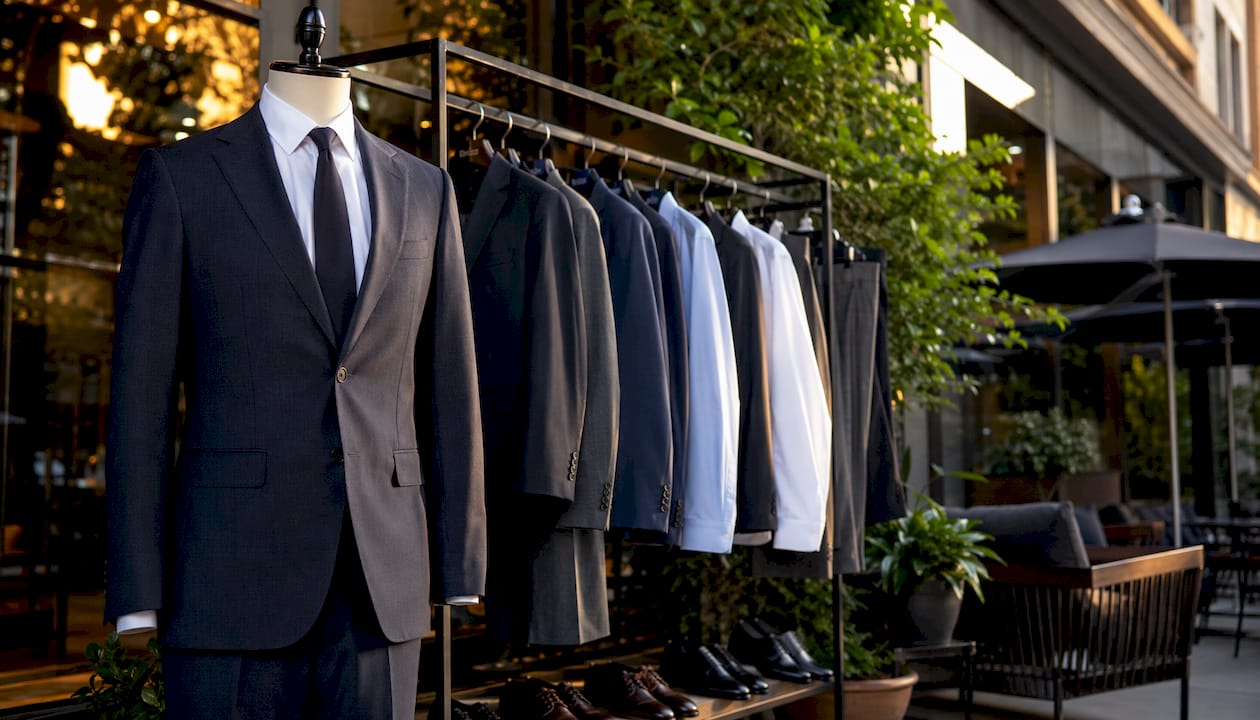
Traditional woven fabrics, think rigid wool, pure cotton twill, or non-stretch polyester, offer structure and a formal appearance but create real limitations in daily wear. They bind at the knees when you sit, pull across the back when you reach, and show stress wrinkles at high-movement points by midday.
Stretch fabric business wear closes that gap without sacrificing the look. The comparison is straightforward:
| Feature | Traditional Business Wear | Stretch Business Wear |
|---|---|---|
| Range of motion | Limited | Full, unrestricted |
| Garment pressure | Higher at stress points | Reduced throughout day |
| Wrinkle resistance | Varies (wool wrinkles less) | Generally better |
| Shape retention | Good initially, bags over time | Maintained with proper recovery |
| Wash durability | High for rigid wovens | High for mechanical stretch; moderate for spandex blends |
| Professional appearance | Classic, structured | Equally polished when well-constructed |
The trade-off is care sensitivity for spandex blends and a slightly higher fabric cost. For most office professionals, that’s an easy exchange for all-day comfort. You can also check out stretch dress pants and formal office standards for a practical consumer-facing breakdown of how these garments hold up in real dress codes.
How stretch fabrics affect your professional appearance and style
The concern that stretch fabrics look casual or informal is outdated. When constructed correctly, stretch business wear is visually indistinguishable from traditional tailoring. The key is in the details: a structured waistband, clean seam lines, and a fabric with enough body to hold its shape.
Stretch dress pants with traditional tailoring details meet formal office standards. The stretch is engineered into the fabric, not expressed in the silhouette. A well-cut stretch blazer in a high-density gabardine sits as crisply on the shoulder as any rigid woven equivalent.
Style guidelines for stretch business wear:
- Choose fabrics with at least 90% recovery to prevent bagging at the seat and knees
- Opt for 2-way stretch for trousers and skirts; 4-way stretch for physically demanding roles
- Maintain traditional tailoring features (creases, structured collars, clean hems) to preserve formality
- Avoid over-specifying spandex; 2–4% in woven fabrics keeps the look structured, not sporty
What’s new in stretch fabric technology for business wear
The past few years have brought real advances beyond simply adding spandex to a base fabric. Bicomponent fiber technology, particularly T400 and EME fibers, creates stretch through polymer architecture rather than elastic threads, delivering better wash durability and a cleaner hand feel. These fibers are gaining ground in premium suiting and uniform programs.
Moisture-wicking finishes are now routinely applied to stretch suiting fabrics, pulling perspiration away from the skin during long workdays. Some mills are combining this with odor-control treatments, making stretch business wear genuinely functional for high-demand professional environments.
4-way stretch woven fabrics, once limited to activewear, are now available in suiting-weight constructions. A 4-way stretch gabardine or twill lets you move in every direction without the fabric pulling, which is particularly valuable for professionals who travel frequently or work in physically active roles. The flat seam construction techniques developed for performance wear are also migrating into business apparel, reducing bulk at seam lines and improving comfort against the skin.
Sustainability and the environmental side of stretch fabrics
Stretch fabrics carry a mixed sustainability picture, and it’s worth being clear-eyed about it. Spandex is a synthetic fiber derived from petrochemicals, and it’s notoriously difficult to recycle because it’s chemically bonded to base fibers in blends. Most spandex-blend garments end up in landfill at end of life.
Organic cotton spandex blends offer a partial improvement. The cotton component can be grown without synthetic pesticides, reducing agricultural impact, though the spandex content still presents recycling challenges. For designers prioritizing sustainability, mechanical stretch fabrics are a more defensible choice: they achieve stretch through yarn engineering rather than added synthetic fiber, which simplifies end-of-life processing.
A few practical sustainability considerations:
- Mechanical stretch fabrics have a lower synthetic fiber footprint than spandex blends
- Organic cotton blends reduce agricultural chemical use but don’t solve the recycling problem
- Longer garment lifespan is the most effective sustainability lever; a stretch business garment that lasts five years beats a “sustainable” rigid fabric that wears out in two
- OEKO-TEX Standard 100 certification is worth requesting for stretch fabrics used in garments with direct skin contact, confirming the absence of harmful substances
The industry is actively developing fiber-to-fiber recycling for spandex blends, but commercially viable solutions are still limited in 2026.
Key Takeaways
Stretch fabric is now a core material science decision in professional apparel, not an optional comfort upgrade.
| Point | Details |
|---|---|
| Recovery rate is the critical metric | Fabric recovery below 85% causes visible bagging; specify 90%+ for quality business wear. |
| Spandex percentage has a sweet spot | 2–4% spandex in woven office wear adds comfort without a rubbery feel or sewing problems. |
| Mechanical stretch suits harsh environments | High-twist yarn construction delivers 10–18% stretch with superior bleach and heat resistance for industrial uniforms. |
| Professional appearance is fully compatible | Stretch dress pants and blazers meet formal office standards when traditional tailoring details are maintained. |
| Ilovenichewear offers stretch-enhanced professional pieces | The wrinkle-free women’s blazer at Ilovenichewear applies these stretch and recovery principles to ready-to-wear office attire. |
Stretch-enhanced professional style at Ilovenichewear
You’ve just worked through the material science. Now here’s where it gets easy. Ilovenichewear takes everything covered above, the recovery rates, the wrinkle resistance, the professional silhouette, and puts it into pieces you can actually wear to work without overthinking it.
The wrinkle-free women’s blazer is a great example: it’s built for professionals who need to move freely and still look put-together, whether you’re heading into a client meeting or stepping off a plane. No stiff shoulders, no pulling across the back, just a clean, confident fit that holds its shape all day. Ilovenichewear’s collection is designed for people who want their clothes to work as hard as they do, with styles that feel light and comfortable without ever looking casual. Browse the full collection at Ilovenichewear and find the pieces that fit your workday.