
Flat seams are the single most effective structural feature for reducing friction and pressure in shapewear. The role of flat seams in shapewear comfort goes beyond aesthetics. Flatlock seam construction, the industry term for this technique, joins fabric edges flush without a raised seam allowance, which is the main cause of chafing in traditional garments. Brands like Spanx and Tonton Sportswear have built their activewear and shapewear lines around this technology. Consumers who wear compression garments for extended periods report noticeably less skin irritation when flatlock construction is used, and fabric blend and seam type together determine whether shapewear feels good after two hours or two minutes.
How do flat seams in shapewear reduce friction and improve comfort?
Flatlock seam construction addresses the root cause of chafing rather than masking it with soft fabric. A traditional seam folds two fabric edges together and stitches them, leaving a raised ridge on the interior of the garment. That ridge presses against your skin with every step, bend, or sit. Flatlock stitching, by contrast, joins edges flush without any seam allowance flap, so the interior surface stays flat against your body.
The difference is most noticeable in high-movement areas. The inner thigh, crotch gusset, and waistband are zones where skin contact intensifies during walking or sitting. A raised seam in any of these spots creates a friction point that compounds over hours of wear. Flatlock construction eliminates that raised edge entirely, so those zones stay smooth regardless of how much you move.
Skin sensitivity also plays a role here. People with sensitive skin or conditions like eczema feel traditional seam ridges much faster than others. Flatlock seams reduce the surface area pressing into skin, which lowers the chance of redness or irritation developing after extended wear.
Here is what flat seam construction specifically prevents:
- Chafing at the inner thigh caused by a raised seam rubbing with each stride
- Pressure marks at the waistband from folded fabric edges digging into the midsection
- Redness at the gusset where compression is highest and movement is constant
- Visible lines under clothing from seam ridges pressing through fabric
Pro Tip: Run your finger along the interior of any shapewear before buying. If you feel a raised ridge at the seam, that ridge will press into your skin all day. A truly flat seam feels almost invisible to the touch.
Flat seams vs. seamless vs. traditional seams: which is best?
These three construction methods produce very different wearing experiences. Understanding each one helps you shop with confidence instead of guessing.
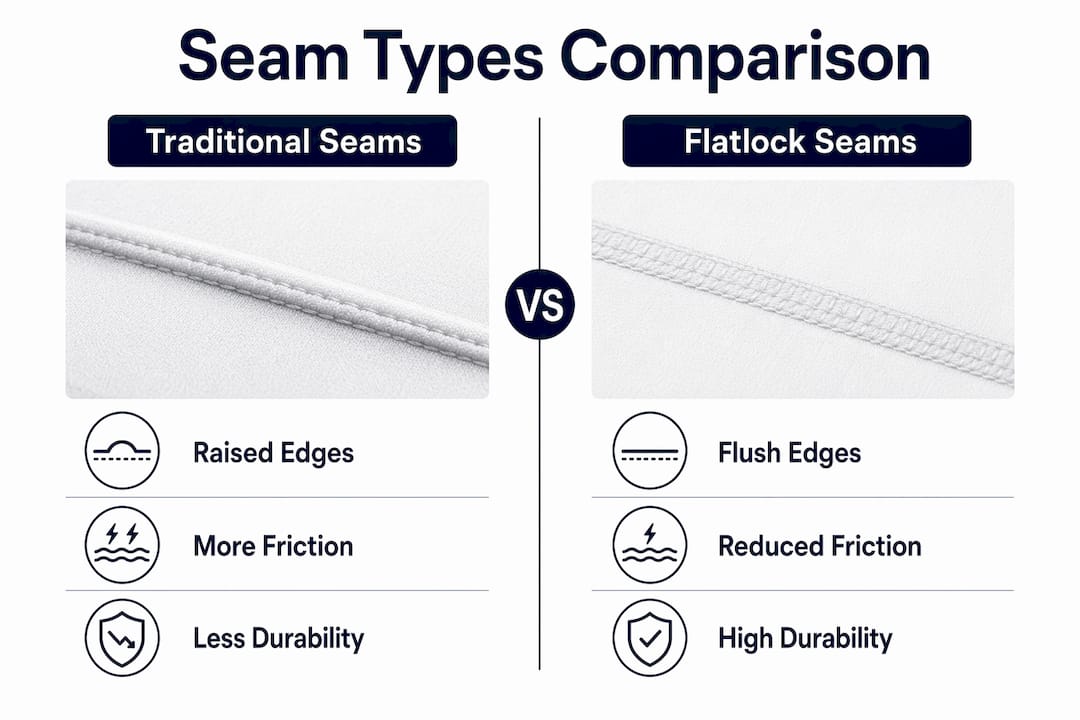
Traditional stitched seams fold fabric edges together and sew them with a standard lockstitch. The result is a raised interior ridge. These seams are durable and inexpensive to produce, but stitched seams contribute to heat buildup and redness after 2–3 hours of wear. That is a real problem for shapewear designed for all-day wear.
Flatlock seams join two fabric edges side by side without overlapping them. The stitch runs across both edges simultaneously, creating a flat, flexible join. This method eliminates the seam allowance entirely and is the standard in performance activewear.
Seamless knitting uses circular knitting machines to produce garments with no seams at all in certain zones. This sounds like the obvious winner, but seamless garments allow more skin contact during motion compared to structured seams, which can affect how the garment holds its shape under compression. Seamless does not equal frictionless. Well-placed flat seams can actually outperform some seamless designs in targeted comfort zones.
| Seam Type | Comfort | Durability | Appearance Under Clothes | Shaping Performance |
|---|---|---|---|---|
| Traditional stitched | Low for long wear | High | Visible lines likely | Good structure |
| Flatlock (flat seam) | High for all-day wear | High | Smooth, minimal lines | Excellent structure |
| Seamless knitting | High in low-motion zones | Moderate | Very smooth | Variable by zone |
The table above shows why flatlock construction is the preferred choice for comfortable shapewear options that need to perform across a full day. Seamless works well for low-compression pieces, but shapewear that needs to hold and shape benefits from the structural integrity flatlock seams provide.
Pro Tip: Check the product description for “flatlock seams” or “flat seam construction” specifically. “Seamless” is a marketing term that can mean different things. Flatlock is a precise construction method with a measurable comfort benefit.
How does seam placement affect shapewear comfort and function?
Seam placement is just as important as seam type. A flatlock seam in the wrong location still causes discomfort. Comfort from seams depends on placement and how they interact with dynamic body movement, not just whether they exist.
The body has specific motion zones where fabric shifts the most. The inner thigh moves with every step. The gusset flexes when you sit or bend. The waist expands and contracts with breathing. Seams placed directly across these zones without accounting for movement will cause friction even if they are flat. The best shapewear for comfort positions seams away from peak-friction zones or uses flatlock construction specifically in those areas to reduce the impact.
Compression pressure distribution also matters. High-compression shapewear pushes fabric harder against the skin, which amplifies any seam imperfection. A flat seam under moderate compression feels fine. That same seam under heavy compression in a tight area can still create a pressure point if the garment does not fit correctly.
Here are the design features that make flat seam shapewear genuinely comfortable for all-day wear:
- Gusset panels cut wide enough to prevent seam migration toward the center during movement
- Waistbands with no interior stitching ridge so the band sits flush against the midsection
- Leg openings finished with flat binding rather than folded hems that dig into the thigh
- Side seams positioned toward the back to move them away from the hip flexor zone
Common mistakes in seam placement include putting a seam directly at the inner thigh fold or running a seam across the lower abdomen where compression is highest. Even flatlock construction cannot fully compensate for poor placement. When you try on shapewear, sit down, walk a few steps, and bend forward. Those movements reveal seam placement issues that standing still never will.
Breathability works alongside seam design. Fabric composition like nylon and spandex blends with moisture-wicking properties reduce heat buildup that worsens seam irritation. A breathable fabric with flat seams is the combination that makes shapewear genuinely wearable for a full day.
What should you look for when buying flat seam shapewear?
Shopping for the best shapewear for comfort requires checking specific construction details, not just relying on marketing language. Here is a practical checklist you can use before any purchase.
-
Check the interior seam profile. Look at product photos showing the inside of the garment. Flat seams appear as thin, flush lines. Raised ridges indicate traditional construction.
-
Read the fabric blend. A nylon and spandex blend in the range of 80% nylon and 20% spandex offers both stretch and recovery. Blends with moisture-wicking properties reduce sweat buildup that makes seam irritation worse.
-
Verify sizing carefully. A garment that is too small folds at the seams when you sit or bend. Flat seams still cause ridging if the garment misfits or folds during movement. Size up if you are between sizes.
-
Examine the waistband construction. Wide waistbands with no interior stitching ridge distribute compression evenly. Narrow waistbands with a folded edge dig in regardless of seam type.
-
Look for gusset details. A cotton-lined gusset with flat seam finishing prevents irritation in the most sensitive area of the garment.
-
Check care instructions. Machine washing on a gentle cycle and air drying preserves flatlock seam integrity. High heat from a dryer degrades the elastic threads that keep flat seams flexible.
Brands that specialize in activewear and shapewear crossover, including options available through JV London, tend to apply flatlock seam standards from performance apparel to their shapewear lines. That crossover is worth looking for when you shop.
Pro Tip: Wash new shapewear once before wearing it all day. The first wash softens any stiffness in the seam threads and gives you a more accurate sense of how the garment will feel in motion.
Flat seams also help maintain a smooth silhouette under tight clothing by preventing visible panty lines and seam ridges from pressing through fitted outfits. That dual benefit of comfort and appearance is what makes flatlock construction the standard to look for.
Key takeaways
Flat seam construction is the most reliable structural feature for achieving all-day shapewear comfort because it eliminates friction at the source rather than compensating for it elsewhere.
| Point | Details |
|---|---|
| Flatlock seams eliminate friction | Edges join flush with no raised allowance, removing the main cause of chafing. |
| Seam placement matters as much as type | Flat seams in the wrong motion zone still cause pressure points during movement. |
| Seamless is not always better | Well-placed flatlock seams outperform some seamless designs in high-compression zones. |
| Fabric blend works with seam type | Nylon and spandex blends with moisture-wicking properties maximize flat seam comfort benefits. |
| Fit accuracy protects seam performance | Garments that are too small fold at seams during movement, negating flatlock benefits. |
Why flat seams changed how i think about shapewear
I used to assume that shapewear discomfort was just the price of compression. You want the shaping, you accept the pinching. That thinking changed when I started paying attention to seam construction specifically.
The first time I wore a piece with genuine flatlock seams through a full workday, the difference was not subtle. No red marks at the waistband. No inner thigh irritation after sitting for hours. The garment felt like it was working with my body instead of against it. That experience made me realize that most shapewear discomfort is a construction problem, not a compression problem.
What I have learned since then is that you need to test shapewear in motion, not just standing in front of a mirror. Sit down immediately. Walk around. Bend over. Those movements expose seam placement issues within seconds. A garment that feels fine standing still can reveal a poorly placed seam the moment you sit. I also pay close attention to shapewear fabric technology now, because seam quality and fabric quality are connected. A great flatlock seam in a low-quality fabric still underperforms.
The activewear and shapewear crossover happening right now is genuinely exciting. Performance brands that have used flatlock construction for years are bringing those standards into everyday shapewear. That is good news for anyone who wants comfortable shapewear options that hold up through a real day, not just a photo shoot.
— I
Discover flat seam shapewear at Ilovenichewear
You deserve shapewear that feels as good at 6 PM as it did at 8 AM. Ilovenichewear carries comfortable shapewear options built with the construction details that actually make a difference: flat seam finishing, breathable fabric blends, and thoughtful design in all the right places.
Whether you are looking for shapewear for all-day wear or a specific piece for a fitted outfit, Ilovenichewear has options worth exploring. Every piece is chosen with comfort and real wearability in mind. Browse the full collection at Ilovenichewear and find shapewear that works with your body, not against it. Free shipping on all orders makes it easy to try something new.
FAQ
What are flat seams in shapewear?
Flat seams, also called flatlock seams, join fabric edges side by side without overlapping them, creating a flush interior surface with no raised ridge. This construction eliminates the main friction point that causes chafing in traditional shapewear.
Do flat seams actually make shapewear more comfortable?
Yes. Seamless or flat-lock seams are the recommended construction for minimizing skin irritation and chafing in compression garments. The benefit is most noticeable during extended wear in high-movement areas like the inner thigh and waistband.
Is seamless shapewear better than flat seam shapewear?
Not necessarily. Seamless garments increase skin contact during movement, which can reduce shaping structure. Well-placed flatlock seams often outperform seamless construction in high-compression shapewear because they provide both comfort and structural support.
How do i know if shapewear has true flat seams?
Check the interior of the garment for thin, flush seam lines with no raised edge. Product descriptions should specifically mention “flatlock” or “flat seam construction.” If the description only says “seamless,” ask for interior photos before purchasing.
How should i care for flat seam shapewear?
Wash on a gentle cycle in cold water and air dry to preserve the elasticity of the flatlock stitch threads. High heat from a dryer degrades the spandex blend and loosens the seam structure over time, reducing both comfort and shaping performance.