
Breathability in shapewear is the fabric and design quality that allows air to circulate and moisture to escape, preventing heat buildup while preserving compression and shaping. This is why breathability matters in shapewear far beyond simple comfort. Poor airflow traps sweat against your skin, raises your body temperature, and can lead to redness, irritation, and even bacterial buildup within hours of wear. Modern shapewear made from nylon-spandex blends, seamless knitting, and mesh panels solves all of this without sacrificing the smooth silhouette you want. Understanding how breathability works helps you shop smarter and wear your shapewear longer, with confidence.
Why breathability matters in shapewear fabric choices
The fabric your shapewear is made from is the single biggest factor in how breathable it feels. Not all compression fabrics are equal, and the differences show up fast once you start moving through your day.
Nylon-spandex blends are superior to polyester-based shapewear for temperature regulation. Nylon fibers have naturally larger gaps between them, which allows air to flow through while the spandex keeps the 4-way stretch and compression intact. Polyester, by contrast, has a tighter fiber structure that holds heat close to the skin. You feel the difference after about an hour of wear.
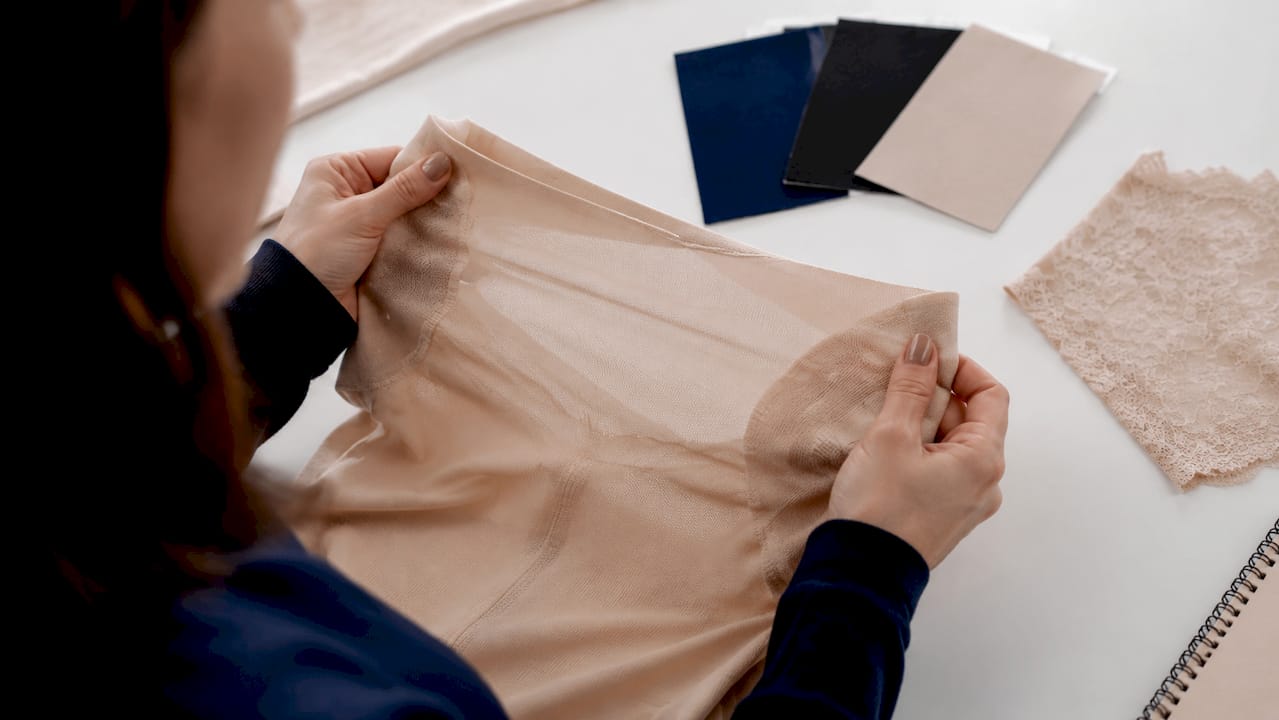
Fabric density, measured in GSM (grams per square meter), matters just as much as fiber type. The optimal GSM range for breathable shapewear sits between 180 and 220. Below 180 GSM, the fabric is too thin to hold compression. Above 220 GSM, even a technically breathable fabric traps heat because the weave is simply too dense for air to pass through. This is a detail most shoppers overlook entirely.
Fabric finishes add another layer of performance. Silver ion and bamboo fiber treatments modify the surface tension of the fabric, pulling sweat away from your skin and accelerating evaporation. This reduces the sticky, clammy feeling that makes non-breathable shapewear so uncomfortable. Cotton blends feel soft but absorb moisture rather than wicking it, which makes them a poor choice for all-day shapewear wear.
| Fabric Type | Breathability | Compression | Moisture Management |
|---|---|---|---|
| Nylon-Spandex | High | High | Excellent (wicks moisture) |
| Polyester Blend | Low to Medium | Medium | Poor (retains heat) |
| Cotton Blend | Medium | Low | Poor (absorbs, stays wet) |
For more on how modern fabric blends perform in shapewear, the nylon-spandex blend guide at Ilovenichewear breaks down the benefits clearly.
Pro Tip: Check the fabric label before buying. Look for at least 20% spandex content and a nylon-dominant base. If the label lists polyester first, expect more heat retention during extended wear.
How construction techniques affect shapewear airflow
Fabric choice alone does not guarantee a breathable garment. How the shapewear is constructed determines whether that breathable fabric actually does its job.
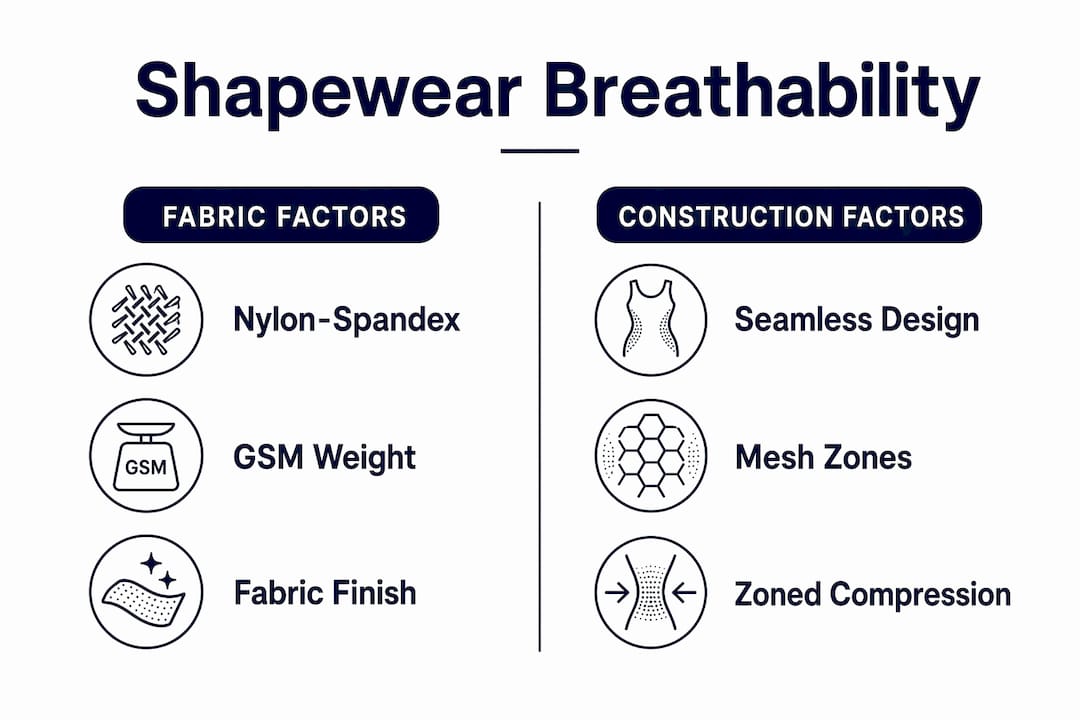
Seamless knitting technology integrates airflow channels directly into the garment structure alongside compression zones. Traditional stitched seams, by contrast, create ridges that press against the skin, generate friction, and physically block airflow in the areas where heat builds up most. The result is a garment that feels tighter and hotter than its fabric weight would suggest.
Key construction features to look for include:
- Seamless knitting: Eliminates seam ridges that cause friction and heat buildup, especially around the waist, thighs, and lower back.
- Mesh or perforated panels: Placed strategically at high-heat zones like the inner thighs, lower back, and sides to allow direct airflow where your body generates the most warmth.
- Zoned compression: Firmer panels at the target shaping areas, lighter knit at the sides and back, so compression is focused without suffocating the whole torso.
- Flat-lock or bonded edges: Reduces edge friction at hems and waistbands, which is where irritation typically starts on longer wear days.
Even breathable fabric blends can feel suffocating when paired with stitched seams. Seamless construction with integrated mesh zones is now the industry standard for real breathability in shapewear. If a garment has visible seam lines running across the thighs or lower back, that is a sign airflow is being compromised at exactly the wrong spots.
Pro Tip: When trying on shapewear, pay attention to how the waistband and inner thigh areas feel after five minutes of movement. Heat or friction in those spots early on will only intensify over a full day of wear.
What happens when your shapewear cannot breathe
Non-breathable shapewear does not just feel uncomfortable. It creates a chain of physical reactions that undermine the very reason you put it on.
Skin redness appearing within 2–3 hours of wear is primarily caused by heat buildup and seam friction, not by wearing the wrong size. This is a common misconception. Many people size up thinking it will help, but the real fix is switching to a breathable construction. Redness signals that your skin is under thermal and mechanical stress, and continuing to wear the garment will make it worse.
Moisture retention creates a second problem. Non-breathable synthetics trap moisture against the skin, creating warm, damp conditions where bacteria thrive. Prolonged exposure increases the risk of skin infections, particularly in areas with skin-on-skin contact like the inner thighs and under the bust. Breathable shapewear is a hygiene necessity, not just a comfort upgrade.
The third consequence is the most ironic. Discomfort causes wearers to tense their muscles, particularly in the shoulders and jaw, which visibly compromises the smooth silhouette shapewear is designed to create. You end up with a garment that is technically compressing your midsection while your body language is undoing the effect entirely. Comfort directly impacts shaping effectiveness, and breathability is what keeps you comfortable.
For a deeper look at how to wear shapewear safely over time, the shapewear health guide at Ilovenichewear covers the key considerations clearly.
How to choose the best breathable shapewear for your life
Choosing breathable shapewear comes down to three things: fabric composition, fabric weight, and construction style. Get all three right and you have a garment you can wear comfortably from morning to evening.
Professionals recommend 20%–30% spandex content alongside breathable mesh or moisture-wicking zones for the best balance of support and comfort in daily wear. Below 20% spandex, the garment loses its shaping hold. Above 30%, the compression becomes restrictive and heat retention increases. That 20%–30% range is the sweet spot for all-day wearability.
Fabric weight should fall in the 180–220 GSM range, as noted earlier. Pair that with a nylon-dominant base and you have the foundation of a genuinely breathable garment. The shapewear fabric technology guide at Ilovenichewear goes into detail on what these specs mean in practice.
Different shapewear styles suit different breathability needs:
- Seamless bodysuits: Best for full-torso coverage with zoned compression. Look for mesh panels at the sides and lower back.
- Shaping shorts: Ideal for thigh and hip support. Prioritize inner-thigh mesh panels and flat-lock hems to prevent chafing.
- Targeted waist cinchers: Focused compression with less total coverage. Easier to keep breathable because less surface area is covered.
- Shaping camisoles: Great for upper-body smoothing with lighter compression. Breathability is easier to achieve here due to the open neckline and shorter length.
When evaluating a piece before buying, ask yourself these questions:
- Does the fabric label list nylon as the primary fiber?
- Is the spandex content between 20% and 30%?
- Are there visible mesh or perforated panels at the thighs, sides, or lower back?
- Is the construction seamless, or are there stitched seams across high-heat zones?
- Does the waistband feel flat against the skin without digging in?
If you answer yes to most of these, you have found a piece worth trying. For guidance on matching styles to your body shape, the shapewear fit guide at Ilovenichewear is a helpful next read.
Key takeaways
Breathable shapewear works because the right fabric, weight, and construction allow air to circulate and moisture to escape, keeping you comfortable, healthy, and confidently shaped all day.
| Point | Details |
|---|---|
| Fabric type is foundational | Nylon-spandex blends outperform polyester for airflow and moisture management. |
| GSM range matters | Aim for 180–220 GSM to balance compression with breathability. |
| Construction is as important as fabric | Seamless knitting and mesh panels prevent heat buildup that stitched seams cause. |
| Poor breathability has real health risks | Trapped moisture promotes bacterial growth and skin irritation within hours. |
| Spandex content guides daily wearability | A 20%–30% spandex content delivers support without restricting airflow. |
Why i think breathability is the feature most shoppers underestimate
Most people shopping for shapewear focus on compression level and silhouette. Breathability rarely makes the shortlist. That is a mistake I see play out repeatedly, and it is one of the most avoidable sources of shapewear frustration.
Here is what I have noticed: shoppers often assume thinner fabric equals more breathable. That is not accurate. A thin polyester garment can feel just as suffocating as a thick one because the fiber structure, not the thickness, determines airflow. The GSM and fiber type combination is what actually matters.
The other misconception I run into is that breathable means less supportive. Modern seamless knitting technology has made that tradeoff obsolete. You can have firm, targeted compression and genuine airflow in the same garment. The brands doing this well are using nylon-spandex blends at the right GSM with integrated mesh zones. That combination is not a luxury feature anymore. It is the baseline for any shapewear worth wearing past noon.
What I find most compelling is the confidence angle. When you are not distracted by heat or discomfort, you carry yourself differently. Your posture is relaxed, your movement is natural, and the shapewear does its job without you fighting it. That is the real benefit of breathability. It is not just about staying cool. It is about wearing the garment the way it was designed to be worn.
— I
Explore breathable shapewear at Ilovenichewear
If you are ready to feel the difference that breathable construction makes, Ilovenichewear has you covered. The collection features shapewear built with nylon-spandex blends, seamless construction, and moisture-wicking finishes designed for real, all-day wear.
Whether you need full-body smoothing, targeted waist support, or lightweight shaping for warm weather, you will find options that prioritize your comfort without compromising on shape. Every piece is chosen with breathability and wearability in mind, so you can move through your day feeling light, confident, and completely at ease. Browse the full collection at Ilovenichewear and find the breathable shapewear that fits your life.
FAQ
What makes shapewear breathable?
Breathable shapewear combines nylon-spandex fabric blends, a GSM between 180 and 220, and seamless construction with mesh or perforated panels to allow airflow and wick moisture away from the skin.
Is breathable shapewear less supportive than regular shapewear?
No. Seamless knitting technology allows zoned compression and airflow to coexist in the same garment, delivering firm shaping without sacrificing breathability.
How do i know if my shapewear is not breathable enough?
Skin redness, heat buildup, or irritation appearing within 2–3 hours of wear signals poor breathability caused by heat and seam friction, not fit alone.
What spandex content is best for breathable daily shapewear?
A spandex content of 20%–30% paired with mesh zones offers the best balance of support, comfort, and breathability for everyday wear.
Can non-breathable shapewear cause skin problems?
Yes. Trapped moisture from non-breathable fabrics creates conditions where bacterial growth increases, raising the risk of skin irritation and infection with regular wear.