
Full-body shapewear is a compression garment designed to smooth, lift, and shape your silhouette from shoulders to thighs in a single piece. Getting it on correctly is the difference between an all-day confidence boost and a frustrating, uncomfortable experience. These full-body shapewear putting on tips cover everything from preparation to fit verification, so you can wear your shapewear with ease every single time. Whether you are new to shapewear or just tired of the struggle, this guide gives you a clear, practical process to follow.
What to do before putting on full-body shapewear
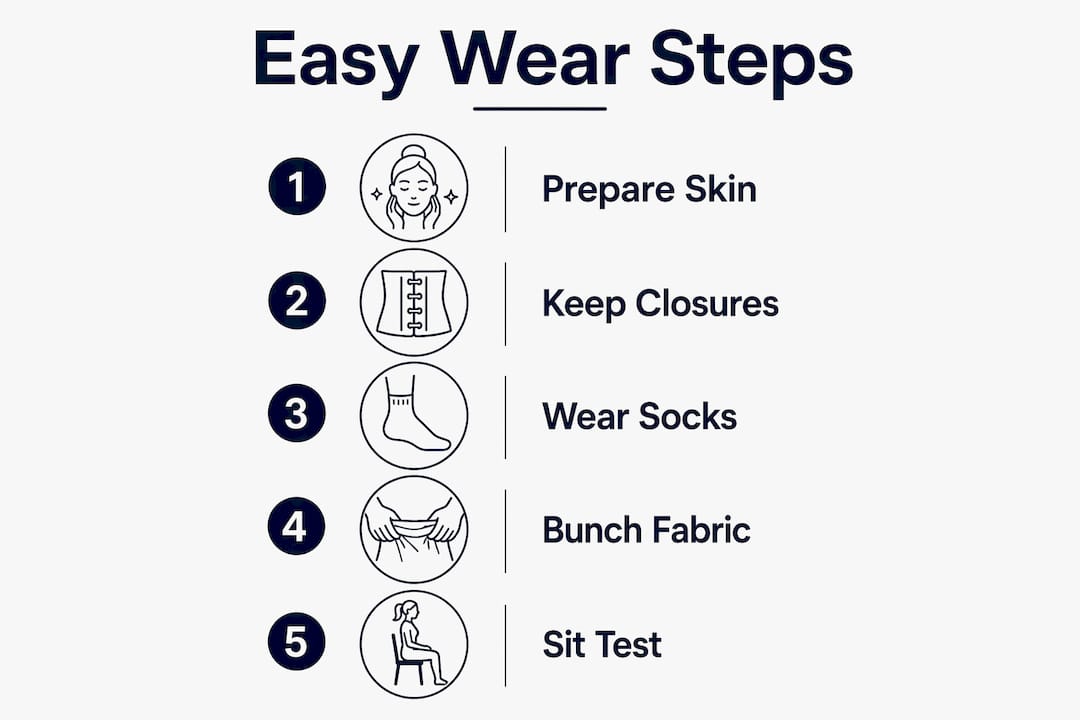
Preparation is the step most people skip, and it is exactly why so many shapewear sessions start with frustration. A few minutes of prep makes the entire process smoother and more comfortable.
The most important rule is to start with dry skin. Damp or freshly moisturized skin makes positioning harder and causes the fabric to bunch and cling in the wrong places. If you just showered, wait at least 10 minutes before attempting to put on your shapewear.
Understanding your garment’s compression level before you start also matters. Light compression is easy to pull on, while firm or extra-firm compression requires more patience and technique. Knowing what you are working with helps you set realistic expectations and adjust your approach. If you are unsure whether your size is right, shapewear sizing often runs small, so always measure your waist and hip circumference rather than relying on your regular dress size.
Here is your pre-wear checklist:
- Skin is fully dry, with no lotion or oil applied in the last 10 to 15 minutes
- All hooks, snaps, and closures on the garment are fastened before you start dressing
- You have a full-length mirror nearby to check placement as you go
- You know the compression level of your garment (light, medium, or firm)
- You have measured your waist and hips to confirm you are wearing the correct shapewear size
Pro Tip: Keep all closures fastened while putting on your shapewear. It gives you better control over the fabric and prevents the garment from twisting as you pull it up.
How to put on full-body shapewear easily, step by step
The step-by-step method below is the most reliable shapewear application guide for getting a full-body garment on without twisting, bunching, or trapping a limb.
- Lay the garment flat and identify the front. Check for labels, seam placement, or panel markings. Putting it on backward is a surprisingly common mistake.
- Step into the leg openings feet first. Do not pull the garment up past your knees yet. Just get both feet through the correct openings.
- Bunch the fabric down toward your ankles. Gather the shapewear into small folds, working from the waist down to the leg openings. This is the key move that makes pulling up much easier.
- Slowly release the fabric upward from your ankles. Work the fabric up your calves, then your knees, then your thighs. Pull gradually from below the hips upward to avoid entanglements and ensure even placement.
- Position the gusset correctly before pulling higher. The gusset (the reinforced panel in the crotch area) needs to sit flush against your body. Adjust it now before the garment gets tighter to reposition.
- Pull the torso section up slowly. Use both hands and alternate sides, pulling a little on the left, then a little on the right. Avoid yanking from one side only, which causes twisting.
- Guide your arms through the straps or sleeves. If your garment has shoulder straps, slip one arm in at a time. For styles with sleeves, work each arm through gently rather than forcing them.
- Smooth the fabric from bottom to top. Once the garment is on, run your hands upward from the thighs to the torso to release any bunched fabric and ensure even compression.
- Check the neckline and leg openings last. Make sure no fabric is folded under at the edges, which causes visible lines and discomfort.
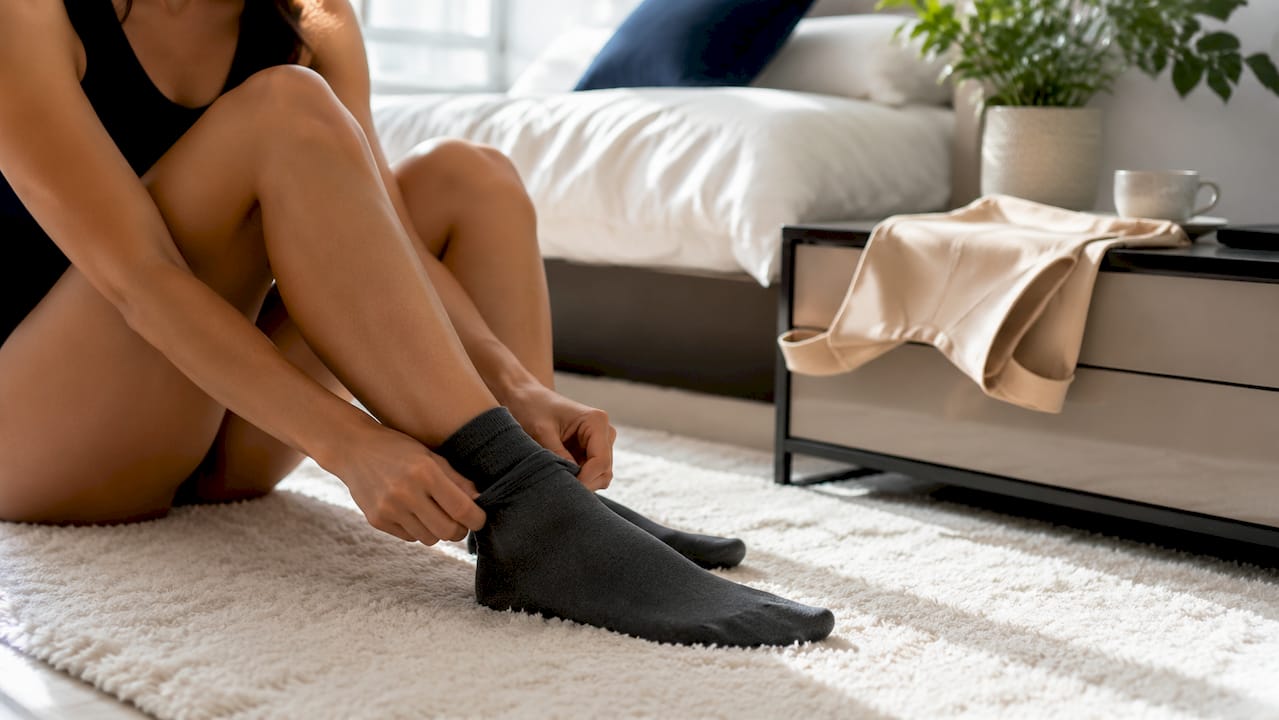
Pro Tip: Wearing thin cotton socks while stepping into the leg openings reduces friction and makes sliding the fabric up your legs noticeably easier. Remove the socks once the garment is past your knees.
How do you know if your shapewear fits correctly?
Getting the garment on is only half the job. Verifying the fit before you leave the house saves you from a day of discomfort or visible lines under your outfit.
The 5-minute sit test is the most reliable comfort check. Sit down on a firm chair for five full minutes and pay attention to any rolling at the waist, pinching at the thighs, or pressure on your ribs. If any of these appear within five minutes, the garment is either the wrong size or the wrong compression level for your body.
After the sit test, do a movement check. Walk across the room, bend down to touch your toes, and take a few deep breaths. A well-fitted garment moves with you without shifting, riding up, or restricting your breathing. Stylist advice consistently recommends trying shapewear on with the intended outfit and checking your silhouette from all angles using a three-way mirror.
Here is a quick fit reference to use before you commit to wearing a garment all day:
| Fit sign | What it means |
|---|---|
| Waistband rolls down | Garment is too small or compression is too firm for your torso |
| Leg openings dig in | Size is too small or leg cut does not suit your body shape |
| Fabric bunches at the stomach | Garment is too large or torso length is too long for your height |
| Visible lines under clothing | Seams are too thick or garment edges need smoothing |
| Comfortable after 5-minute sit test | Fit is correct and garment is ready to wear |
Garments with seamless construction and silicone grip strips prevent rolling and shifting throughout the day. If your current shapewear rolls constantly, the construction itself may be the issue rather than your size. Check out the Ilovenichewear guide on avoiding visible lines for more detail on seam placement and fabric choices.
Pro Tip: Set a pre-event routine that includes the sit test and movement check at least 30 minutes before you need to leave. This gives you time to switch garments if the fit is off, without the stress of a last-minute change.
Troubleshooting common problems when wearing full-body shapewear
Even with the right technique, problems come up. Common fit failures include rolling waistbands, digging straps, bulging leg openings, bunching fabric, restricted breathing, and skin chafing. Most of these trace back to wrong size, poor fabric quality, or a compression level that does not match your activity.
Here is how to fix the most frequent issues:
- Rolling waistband: The garment is likely too small. Try sizing up or look for styles with a wider, silicone-lined waistband that grips the skin.
- Digging straps or tight leg openings: Check whether the issue is size or style. Some body shapes need a different leg cut. Ilovenichewear’s shapewear fit guide breaks down which styles work best for different proportions.
- Skin chafing or irritation: This usually happens at seam lines or leg openings. Apply a thin layer of anti-chafe balm (such as Body Glide) to friction-prone areas before putting on the garment.
- Difficulty breathing: This is a sign the compression level is too firm for your torso. Switch to a medium-compression style, especially for all-day wear.
- Bathroom breaks: Most full-body shapewear includes a cotton-lined gusset with easy-access fastenings specifically designed for restroom use. Snap or hook closures at the gusset are the most practical feature to look for when shopping.
The comfort-first fit principle is simple: shapewear should feel snug but never restrictive. If you cannot take a full, easy breath, the garment is working against you, not for you.
Best practices for wearing full-body shapewear comfortably all day
Wearing shapewear correctly is not just about how you put it on. How long you wear it and how you care for it directly affects both your comfort and the garment’s lifespan.
Follow these best practices to get the most out of every wear:
- Limit wear to about 8 hours. Wearing shapewear too long can cause skin irritation, restricted circulation, and discomfort. Eight hours is the recommended maximum for firm-compression styles.
- Never sleep in shapewear. Your body needs unrestricted circulation and movement during sleep. Sleeping in compression garments increases the risk of skin irritation and nerve pressure.
- Allow recovery time between wears. Give your skin at least a few hours of rest between sessions, especially if you wore a firm-compression garment.
- Wash after every wear. Sweat and body oils break down elastic fibers quickly. Hand washing in cool water with a gentle detergent preserves the fabric’s stretch and compression. Avoid machine drying, which degrades elasticity fast.
- Choose moisture-wicking fabrics for active days. If you are wearing shapewear to an event that involves movement, look for fabric technology that pulls moisture away from the skin. Nylon-spandex blends with mesh panels are a strong choice.
- Match compression level to your activity. Light compression works for long days on your feet. Firm compression is best reserved for shorter, lower-activity occasions like a dinner or event.
What I have learned from years of wearing and recommending shapewear
The single biggest mistake I see is rushing. People pull shapewear on like a regular pair of tights, get frustrated when it twists or digs in, and assume the garment is defective. It is almost never the garment. It is the technique.
Patience and preparation genuinely matter more than the price tag on your shapewear. I have seen people struggle with expensive garments because they skipped the prep steps, and I have seen budget-friendly pieces perform beautifully when put on correctly. The bunching method, dry skin rule, and the sit test are not optional extras. They are the foundation of a good shapewear experience.
The other thing I want you to take away is this: proper fit improves confidence in a way that no amount of compression alone can deliver. When your shapewear fits correctly and you have put it on without a battle, you feel good from the moment you get dressed. That feeling carries through the whole day. Take the extra five minutes. It is worth it every time.
— I
Find your perfect fit at Ilovenichewear

Ilovenichewear carries a curated selection of full-body shapewear designed with comfort, breathability, and real-life wearability in mind. Whether you are looking for light everyday smoothing or firm-compression styles for special occasions, the collection covers a range of body types and needs. Every piece is chosen with the comfort-first fit principle in mind, so you spend less time adjusting and more time feeling great. Browse the full shapewear collection at Ilovenichewear and find the style that works for your body, your outfit, and your day. Free shipping on all orders makes it easy to try a new style without the risk.
FAQ
What is the easiest way to put on full-body shapewear?
Bunch the fabric down toward the leg openings before stepping in, then slowly release it upward from your ankles to your torso. This method prevents twisting and makes pulling up tight compression fabric much easier.
How long can you safely wear full-body shapewear?
Experts recommend a maximum of about 8 hours of wear for firm-compression shapewear. Wearing it longer can cause skin irritation, restricted circulation, and discomfort.
Why does my shapewear roll down at the waist?
A rolling waistband usually means the garment is too small or the compression level is too firm for your torso. Try sizing up or choose a style with a wider, silicone-lined waistband for better grip.
Do you wear underwear under full-body shapewear?
Most full-body shapewear is designed with a cotton-lined gusset for hygiene, so additional underwear is not necessary. Wearing tights or hosiery over the shapewear is fine if your outfit calls for it.
How do I know if my shapewear size is correct?
Sit in the garment for five minutes and check for rolling, pinching, or restricted breathing. Measuring your waist and hips rather than relying on your regular dress size gives you the most accurate fit.
Key takeaways
Putting on full-body shapewear correctly requires dry skin, a bunching technique, and a 5-minute sit test to confirm the fit before committing to a full day of wear.
| Point | Details |
|---|---|
| Prep your skin first | Always apply shapewear to fully dry skin with no lotion to prevent bunching and misalignment. |
| Use the bunching method | Gather fabric toward the leg openings before stepping in, then release it gradually upward for even placement. |
| Verify fit with the sit test | Sit for 5 minutes and check for rolling, pinching, or restricted breathing before wearing all day. |
| Limit wear to 8 hours | Firm-compression shapewear worn longer than 8 hours can cause skin irritation and circulation issues. |
| Wash after every wear | Hand washing in cool water after each use preserves elasticity and extends the garment’s life. |