
Shapewear compression level is defined as the amount of pressure a garment applies to smooth, shape, and support your body. The four main categories are Light, Medium, Firm, and Extra Firm, each measured in millimeters of mercury (mmHg) and designed for different occasions and comfort needs. Understanding what is shapewear compression level before you buy saves you from the frustration of a garment that feels too tight to breathe in or too loose to do anything useful. Whether you want all-day comfort or serious contouring for a special event, the right compression level makes all the difference.
What is shapewear compression level, and how are the four types different?
Consumer shapewear compression levels fall into four categories: Light (15–20 mmHg), Medium (20–30 mmHg), Firm (30+ mmHg), and Extra Firm. Each level delivers a noticeably different feel and shaping result. Knowing what each one does helps you shop with confidence instead of guessing.
Light compression (15–20 mmHg)
Light compression feels like a soft, breathable pair of snug leggings. It smooths minor bumps and lines without squeezing or restricting movement. This level is ideal for all-day casual wear, travel, and anyone new to shapewear. You can wear it from morning to night without discomfort.
Medium compression (20–30 mmHg)
Medium compression delivers noticeable pressure that flattens the tummy, smooths the hips and thighs, and supports the back. It balances visible shaping with enough comfort for a full workday or an evening out. This level works well under fitted dresses, work trousers, and date-night outfits. Most experienced shapewear wearers call this their everyday go-to.
Firm compression (30+ mmHg)
Firm compression creates significant reshaping that you feel immediately. It contours the waist, lifts the rear, and flattens the midsection more aggressively than Medium. Because of its intensity, wear time is limited to 4–6 hours. Save this level for weddings, formal events, or photo shoots where you want maximum silhouette impact.
Extra firm compression
Extra firm compression is the highest consumer level available, approaching medical-grade territory. It provides maximum control and is best suited for post-surgical recovery or severe contouring needs. Comfortable wear time drops to 2–4 hours. This level is not designed for casual daily use.
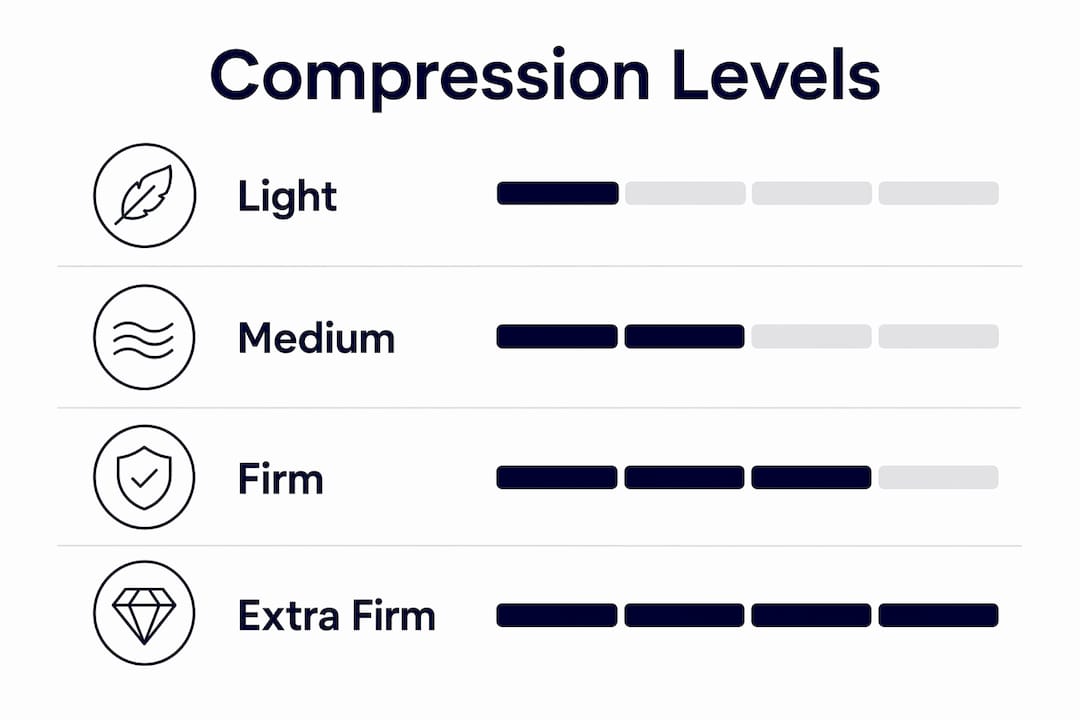
| Level | Pressure | Feel | Best use | Max wear time |
|---|---|---|---|---|
| Light | 15–20 mmHg | Soft, breathable snug | Daily wear, travel | All day |
| Medium | 20–30 mmHg | Firm but comfortable | Work, evenings out | All day |
| Firm | 30+ mmHg | Strong, reshaping | Special occasions | 4–6 hours |
| Extra Firm | 30+ mmHg (max) | Intense, restrictive | Post-surgical, contouring | 2–4 hours |
Pro Tip: If you are new to shapewear, always start with Light compression. Your body needs time to adjust, and starting too firm leads to discomfort and a garment that ends up sitting in a drawer.
How does material construction affect shapewear compression?
The compression a garment delivers is not just about how tight it looks on a hanger. Spandex content and knit tension are the two main engineering factors that control how much pressure a shapewear piece applies to your body. Higher spandex content increases elastic recovery, meaning the fabric bounces back firmly against your skin. Tighter knit machine tension adds pressure independently of the yarn blend used.
Here is how the key construction elements break down:
- Spandex content: Higher percentages create stronger elastic recovery and more consistent compression across the garment.
- Knit tension: Manufacturers adjust machine tension to hit specific mmHg targets. Two garments with identical yarn can feel completely different based on this setting alone.
- Seamless construction: Seamless designs eliminate pressure ridges and visible lines, making the garment more comfortable for longer wear. Check out the benefits of seamless designs for a deeper look at this technology.
- Smart compression panels: Modern shapewear uses flexible panels with breathable, seamless materials that mimic a second skin. These panels allow free movement while still shaping targeted zones.
- Breathable fabrics: Moisture-wicking and ventilated zones reduce heat buildup, which is a common complaint with older, less breathable shapewear styles.
Medical-grade compression starts at 30 mmHg and requires clinical oversight. Consumer shapewear sits below that threshold and focuses on comfort-first shaping. The distinction matters because wearing medical-grade compression without guidance can restrict circulation.
Pro Tip: Look for shapewear that combines a mid-range spandex content with breathable mesh panels. You get solid compression without overheating, which means you will actually wear it regularly.
How to choose the right shapewear compression level for your needs
Wrong compression level selection is one of the leading causes of shapewear returns. Shoppers often assume that firmer equals better results, but that logic leads to garments that are uncomfortable, restrictive, and unworn. The right level depends on your experience, your goal, and the occasion.
Use these questions to guide your shapewear compression level selection:
- Are you a first-time buyer? Start with Light compression. Light compression is recommended for beginners to avoid discomfort and restricted movement while you get used to the sensation.
- What is your goal? Light smooths. Medium shapes. Firm contours. Extra Firm reconstructs. Match the level to the result you actually want.
- How long will you wear it? For all-day wear, Light or Medium is the right call. For a 4-hour event, Firm works well. For 2 hours or less, Extra Firm is an option.
- What are you wearing it under? Fitted formal wear benefits from Firm compression. Casual outfits pair well with Light or Medium.
- Do you have any health considerations? Extra Firm and medical-grade compression require a doctor’s input if you have circulatory issues or are recovering from surgery.
Selecting compression based on daily comfort needs first and reserving firmer levels for special occasions is the approach that leads to the most satisfaction. Getting your measurements right also plays a big role. A well-fitted Medium compression piece outperforms an ill-fitting Firm one every time. Use a shapewear sizing guide to get your numbers before you order.
For more help matching compression intensity to your body shape, the shapewear fit guide at Ilovenichewear walks you through pairing the right level with the right silhouette.
Practical tips for wearing shapewear comfortably at any compression level
Getting the most out of your shapewear comes down to how you wear it, not just which level you choose. Follow these steps to put it on correctly and avoid common fit problems.
- Step in, do not pull from the waist. Start at your feet and work the garment up gradually. Pulling from the top stretches the fabric unevenly and reduces compression effectiveness.
- Smooth as you go. Once the garment is on, run your hands upward from the hem to redistribute fabric and eliminate bunching.
- Check for rolling. If the waistband rolls down, the garment is either too small or the compression level is too high for your body at this time. Size up or drop a level.
- Watch for numbness or tingling. These are signs that the compression is too intense. Remove the garment immediately and try a lighter level.
- Break in Firm and Extra Firm gradually. Wear them for 1–2 hours on the first few uses. Your body adapts over time, and the garment softens slightly with washing.
- Never sleep in high-compression shapewear. Firm and Extra Firm levels restrict circulation during extended wear. Stick to the recommended wear times.
- Pair breathable fabrics with higher compression. If you are wearing Firm compression, choose a moisture-wicking layer underneath to manage heat and comfort.
Shapewear innovation has shifted away from restrictive garments toward breathable, flexible materials that lift and smooth while preserving freedom of movement. That shift means today’s well-made shapewear should feel supportive, not punishing.
Key Takeaways
Shapewear compression level determines how much pressure and shaping a garment delivers, and matching the right level to your occasion, experience, and comfort needs is the single most important buying decision you will make.
| Point | Details |
|---|---|
| Four compression levels exist | Light, Medium, Firm, and Extra Firm each serve different occasions and comfort needs. |
| Material construction drives compression | Spandex content and knit tension control pressure more than garment appearance alone. |
| Start light if you are new | First-time buyers should begin with Light compression to avoid discomfort and returns. |
| Wear time limits matter | Firm compression suits 4–6 hours; Extra Firm is safe for only 2–4 hours at a time. |
| Fit affects results more than level | A well-measured Medium piece outperforms an ill-fitting Firm one every time. |
What I have learned about compression and comfort after years in shapewear
Most people overthink compression level and underthink fit. I have seen it play out the same way repeatedly. Someone buys Extra Firm because they want dramatic results, wears it for two hours, and swears off shapewear entirely. The garment was not the problem. The level was wrong for the moment.
The most wearable shapewear is not the most intense. It is the one you actually keep on. Medium compression worn consistently does more for your silhouette than Extra Firm worn twice a year. That is not a compromise. That is strategy.
The advances in smart compression panels and breathable fabrics have genuinely changed what shapewear feels like. Older garments were stiff, hot, and unforgiving. Today’s well-constructed pieces move with you. The misconception that shapewear must be uncomfortable to work is outdated, and it keeps people from finding pieces they would genuinely love.
My honest advice is to treat compression level like a volume dial, not an on/off switch. Start lower, wear it often, and turn it up only when the occasion calls for it. Your body will tell you when you have found the right setting.
— I
Shapewear that feels as good as it looks at Ilovenichewear
Finding shapewear that actually fits your life, not just your outfit, is what Ilovenichewear is all about.
At Ilovenichewear, the focus is on comfortable, breathable shapewear designed for real wear. Whether you are looking for a light, cozy option for everyday smoothing or a firmer piece for a special occasion, the collection covers multiple compression types with fabrics built for comfort and movement. No stiff, suffocating garments here. Just pieces that feel good, look great, and actually get worn. Free shipping on all orders makes it easy to try the level that suits you best.
FAQ
What is shapewear compression level?
Shapewear compression level is the amount of pressure a garment applies to your body, measured in mmHg and categorized as Light (15–20 mmHg), Medium (20–30 mmHg), Firm (30+ mmHg), or Extra Firm. Each level delivers a different degree of smoothing and shaping.
Which compression level is best for beginners?
Light compression is the best starting point for first-time buyers. It provides gentle smoothing without restricting movement, making it comfortable enough for all-day wear while your body adjusts.
How long can you wear firm compression shapewear?
Firm compression is safe for 4–6 hours, while Extra Firm should be worn for no more than 2–4 hours at a time. Exceeding these limits can restrict circulation and cause discomfort.
What is the difference between consumer and medical-grade compression?
Medical-grade compression starts at 30 mmHg and requires clinical oversight. Consumer shapewear focuses on comfort-first shaping at lower pressure levels and does not require a doctor’s guidance for everyday use.
Does higher compression always mean better shaping results?
Higher compression does not automatically produce better results. A well-fitted Medium compression garment outperforms an ill-fitting Firm one, and comfort directly affects how long you wear it, which determines real-world shaping impact.