
A shapewear sizing measurement guide is the exact method for measuring your body so your shapewear fits comfortably, stays in place, and actually does its job. Most people grab their usual dress size and hope for the best. That approach leads to rolling waistbands, pinching fabric, and garments that end up at the back of the drawer. Experts advise against using standard dress size for shapewear and recommend measuring bust, natural waist, and hips with a soft tape measure instead. This guide walks you through every step, from taking your first measurement to verifying fit after purchase, so you feel confident and comfortable from day one.
Which body measurements matter for shapewear sizing?
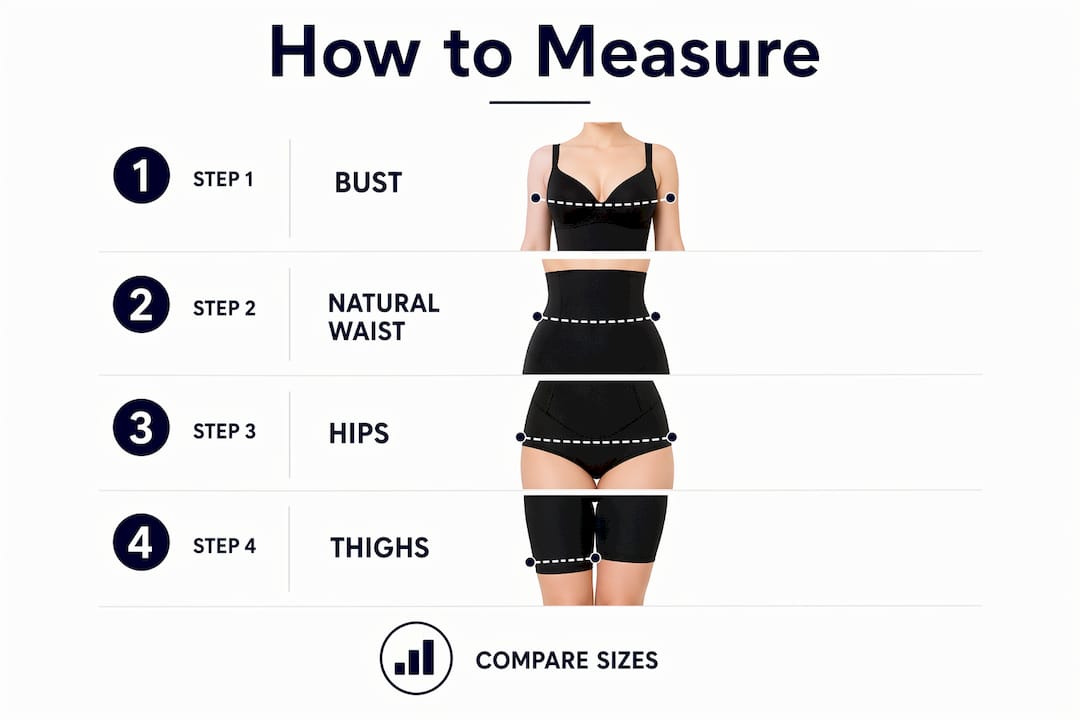
The four key measurements for shapewear are bust, natural waist, hips, and thighs. Each one serves a specific purpose depending on the style you choose.
Here is what each measurement covers and why it matters:
- Bust: Measure across the fullest part of your chest, keeping the tape parallel to the floor. This measurement matters most for bodysuits, camisoles, and full-body styles.
- Natural waist: This is the narrowest point of your torso, typically 1–2 inches above your navel. It is not the same as your pants waist. Confusing the two is one of the most common sizing errors.
- Hips: Measure the widest point of your seat, roughly 7–9 inches below your natural waist. This number drives sizing for shorts, briefs, and waist cinchers.
- Thighs: Wrap the tape around the fullest part of one thigh. Thigh measurement is critical for shorts and full-length styles. A tight leg opening creates visible lines and discomfort, while a loose one lets the garment shift.
Your posture and conditions during measuring matter just as much as the measurements themselves. Stand naturally, breathe normally, and wear only fitted underwear or bare skin. Measurements taken while sucking in or holding your breath can be off by more than half an inch, which is enough to push you into the wrong size.
Pro Tip: Ask a friend to help you measure your hips and bust. It is nearly impossible to keep the tape perfectly level on your own, especially across the back.
Different shapewear styles call for different measurements. A waist cincher only needs your natural waist and hip numbers. A full-body suit needs all four. Check which style you are shopping for before you start measuring, so you know exactly what to record.
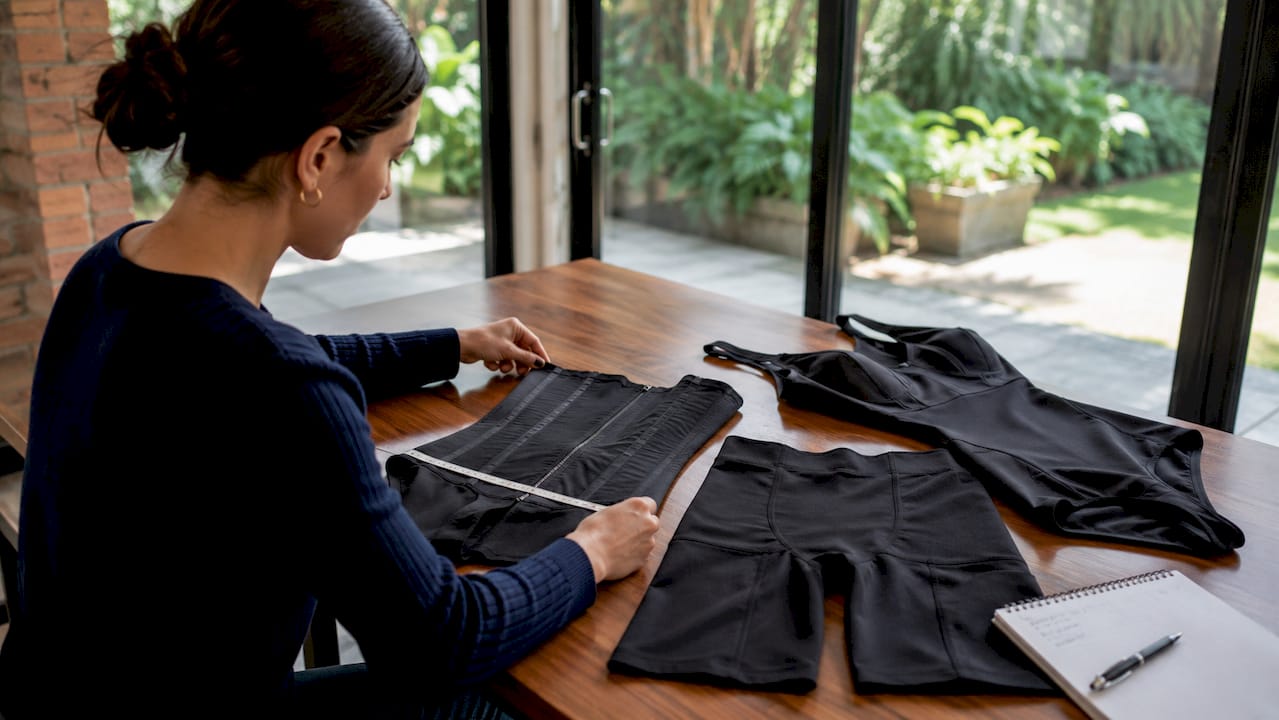
How to measure yourself accurately for shapewear
Preparation makes a real difference here. Wear minimal clothing, ideally just fitted underwear, and use a soft, non-rigid tape measure over bare skin. Rigid tapes or measuring over bulky clothes introduce errors that throw off your size selection entirely.
Follow these steps in order:
- Prepare your tools. Grab a soft fabric tape measure, a mirror, and a notepad. If you do not have a tape measure, a piece of string and a ruler work fine.
- Stand naturally. Feet together, shoulders relaxed, arms at your sides. Do not arch your back or tuck your hips.
- Measure your bust. Wrap the tape around the fullest part of your chest. Keep it parallel to the floor and snug but not tight. Write down the number in inches.
- Measure your natural waist. Find the narrowest part of your torso, usually just above your navel. Exhale gently and measure. Do not pull the tape tight.
- Measure your hips. Stand with feet together and wrap the tape around the widest part of your seat. Keep the tape level all the way around.
- Measure your thighs (if needed). Stand with feet slightly apart. Wrap the tape around the fullest part of one thigh, about halfway between your knee and hip.
- Repeat each measurement once. Take every measurement twice and use the larger number if they differ. Small variations between attempts are normal.
Pro Tip: Do your measurements in the morning before eating or drinking. Your body is at its most consistent size then, which gives you the most reliable numbers.
Some shoppers use apps like full-body shapewear guides to cross-check their numbers before ordering. That extra step takes two minutes and can save you a return. Once you have your four measurements written down, you are ready to read a size chart with confidence.
How do shapewear size charts work?
A shapewear size chart maps your body measurements to a labeled size like S, M, L, or XL. The chart below shows a typical range you will find across most brands:
| Size | Bust (in) | Waist (in) | Hips (in) |
|---|---|---|---|
| S | 33–35 | 25–27 | 35–37 |
| M | 36–38 | 28–30 | 38–40 |
| L | 39–41 | 31–33 | 41–43 |
| XL | 42–44 | 34–36 | 44–46 |
| 2XL | 45–47 | 37–39 | 47–49 |
Your dress size from a clothing brand tells you almost nothing useful here. Shapewear sizing is built around compression and body measurements, not the same standards used for jeans or blouses. Always go directly to the brand’s own size chart.
Brand-specific size charts are the only reliable reference because sizing varies across manufacturers. A medium from one brand may fit like a large from another. Check the chart on the product page every single time, even if you have bought from that brand before.
When your measurements fall between two sizes, size up. Sizing up when between sizes gives you better comfort and a more effective shaping result than squeezing into the smaller option. This is especially true for high-compression garments.
Compression levels range from light to high, and each level has different sizing implications. Light compression is designed for all-day wear and mostly smooths. Medium compression uses targeted panels for a more defined shape. High compression delivers maximum shaping but is meant for shorter wear periods. High-compression shapewear requires more precise sizing because the higher elastane density and power mesh leave less room for error. A half-size mistake in a light smoother is barely noticeable. The same mistake in a high-compression piece shows up immediately as discomfort or visible bunching.
Pro Tip: When shopping across multiple brands, open each brand’s size chart in a separate tab and compare your measurements against all of them before adding anything to your cart.
For more on how fabric construction affects how your measurements translate to fit, the shapewear fabric technology guide at Ilovenichewear breaks down elastane and power mesh in plain language.
How do you verify shapewear fit after purchase?
Getting the right size on paper is only half the job. The real test happens when you put the garment on and move around in it. Two simple tests tell you everything you need to know.
The Sit Test means sitting down for at least five minutes and paying attention to what the garment does. If it rolls, pinches, or shifts during the Sit Test, that is a fit or style issue regardless of how accurate your tape measurements were. A waistband that rolls down is almost always a sign the garment is too small. Pinching at the thigh opening points to the same problem.
The Movement Test means walking, bending, and stretching for a few minutes. Good shapewear stays exactly where you put it. If it rides up, bunches, or creates new lines when you move, it is not the right fit for your body.
Here is a quick troubleshooting list for the most common fit issues:
- Waistband rolls down: Size up or try a style with a higher waistband.
- Fabric pinches at the thigh: The leg opening is too tight. Size up or choose a style with a wider cut.
- Garment feels loose with little compression: Size down or try a higher compression level.
- Visible lines under clothing: The garment edge does not sit at the right point on your body. Try a different style cut.
- Discomfort after 30 minutes: The compression level may be too high for all-day wear. Switch to a medium or light option.
Common sizing mistakes include relying on dress size, skipping the second measurement, and ignoring fit issues after purchase. These errors lead to returns and frustration that are completely avoidable. Also, understanding fabric composition helps you predict how a garment will feel before you buy. A piece with a high elastane percentage will feel tighter at first but stretch more with wear. Knowing this helps you decide whether to size up or stay put.
If you keep running into sizing surprises, the Ilovenichewear article on why shapewear runs small explains exactly why that happens and what to do about it.
Key takeaways
Accurate body measurements are the single most reliable way to find shapewear that fits well, feels comfortable, and stays in place all day.
| Point | Details |
|---|---|
| Measure four body areas | Take bust, natural waist, hip, and thigh measurements for complete sizing accuracy. |
| Skip the dress size | Your regular clothing size does not translate to shapewear. Always use a tape measure. |
| Size up between sizes | When measurements fall between two sizes, the larger size gives better comfort and shape. |
| Match compression to purpose | High-compression styles need precise sizing; light styles allow a little more flexibility. |
| Test fit before committing | Use the Sit Test and Movement Test to confirm the garment works in real movement. |
Why getting shapewear sizing right changed how i shop
I used to grab my usual size and assume shapewear would just work. It never did. The waistband rolled, the leg openings pinched, and I spent more time adjusting than actually wearing the piece. The turning point was the first time I actually measured myself properly, wrote the numbers down, and compared them to a brand’s size chart instead of guessing.
What surprised me most was how different my natural waist measurement was from what I thought it was. I had been mentally using my pants waist for years. Those two numbers are not the same, and that gap was the reason nothing ever fit right.
The Sit Test felt almost too simple when I first heard about it. Sit down for five minutes and see what happens. But it is genuinely the fastest way to know if a garment is going to work in real life. A shapewear piece that feels fine standing up can roll completely within ten minutes of sitting at a desk.
My honest advice: be patient with the measuring process the first time. It takes about ten minutes, and you only need to do it once unless your body changes. After that, shopping for shapewear becomes much easier and a lot less frustrating. Prioritize how the garment feels over what size label it carries. A size L that fits perfectly is always better than a size M that you force yourself into.
— I
Find your perfect fit at Ilovenichewear
Now that you know exactly how to measure and what to look for, the fun part begins. Ilovenichewear carries a wide range of shapewear styles and sizes designed to feel comfortable and look great, whether you want light smoothing for everyday wear or something with more structure for a special occasion.
Every product page includes sizing details to help you match your measurements to the right style. Browse the full collection at Ilovenichewear and use the measurements you just took to shop with total confidence. Free shipping on all orders makes it easy to try a style and see how it feels. Your perfect fit is closer than you think.
FAQ
What measurements do i need for shapewear sizing?
You need bust, natural waist, hip, and thigh measurements. Thigh measurement applies specifically to shorts and full-length styles.
Why does my dress size not work for shapewear?
Shapewear sizing is based on body measurements and compression level, not the same standards used for regular clothing. Using your dress size leads to poor fit.
What should i do if i fall between two sizes on a size chart?
Always choose the larger size. Sizing up between sizes gives better comfort and a more effective shaping result, especially for high-compression garments.
How do i know if my shapewear fits correctly?
Perform the Sit Test by sitting for five minutes and the Movement Test by walking and stretching. If the garment rolls, pinches, or shifts, the fit or style needs adjustment.
Does compression level affect which size i should pick?
Yes. High-compression shapewear requires more precise sizing because the denser fabric leaves less room for error. Light and medium styles are more forgiving if you are between sizes.