
Shapewear is defined as a compression garment that reshapes the body’s silhouette by applying external pressure to soft tissue. The core difference between flattening and smoothing comes down to how that pressure is applied. Uniform compression forces tissue into a single flat plane, creating the dreaded “squashed” look. Well-designed shapewear, by contrast, uses gradient compression and strategic panel placement to redistribute tissue and enhance your natural curves. Proper shapewear can deliver an immediate visual waist reduction of 1 to 2 inches without altering body composition at all. That result is only possible when fabric engineering, garment design, and sizing all work together correctly.
Why shapewear flattens versus smooths: the core mechanics
Flattening is the result of uniform, excessive compression that pushes tissue in every direction equally. When a garment applies the same level of pressure across your entire midsection, there is nowhere for the tissue to go except outward above and below the compression zone. The result is a flat, rigid look that reads as unnatural under clothing.
Smoothing works differently. Smoothing requires fabric engineering that lifts and sculpts to enhance natural body curves rather than suppress them. A smoothing garment guides soft tissue into a more refined position while still allowing your body to retain its shape. Think of it like the difference between pressing a pillow flat with your palm versus gently cupping it into a rounder form. The pressure is similar, but the result is completely different.
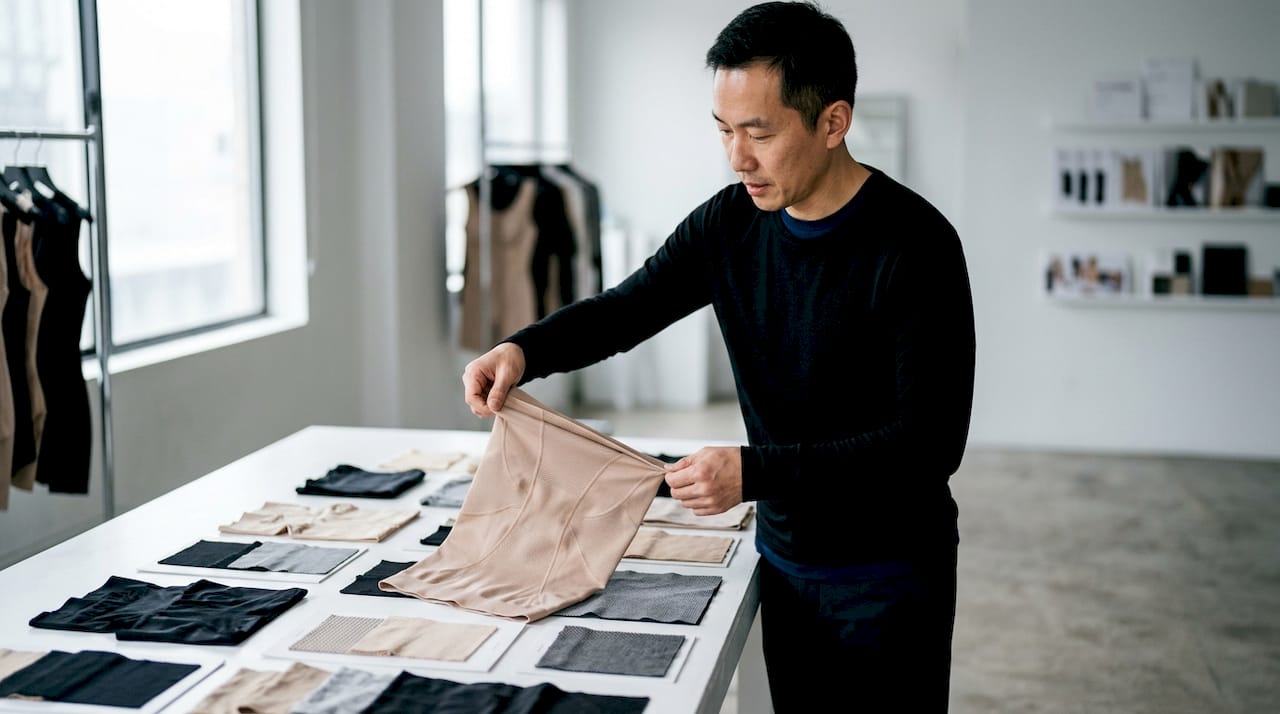
The industry term for this distinction is compression zoning, and it is the single most important concept in understanding how shapewear actually works. Gradient compression zones with varying tension levels across the abdomen, hips, and thighs are the key to shaping without flattening. Garments that lack this zoning compress uniformly and flatten by default.
How does fabric technology influence flattening or smoothing?
The fabric blend in a shapewear garment determines how compression is delivered to your body. Nylon, spandex, and elastane blends with multi-directional stretch enable smoothing and mobility at the same time. These materials flex with your body rather than against it, which is what allows a garment to contour rather than compress flat.
Poor fabric engineering is the most common cause of the shapewear flattening effect. When a garment uses a single-tension fabric throughout, it applies equal pressure everywhere. That uniform pressure has no ability to lift, shape, or redirect tissue. The result is a flat, stiff silhouette that looks more like a cast than a contoured garment.
High-quality shapewear uses seamless knitting technology for even compression and to prevent visible lines and pressure points. Seamless, circular knit construction distributes pressure evenly across the surface area, which means no single point bears too much force. That even distribution is what creates the smooth, second-skin feeling that well-made shapewear is known for.
Key fabric features to look for when shopping:
- Multi-directional stretch: Fabric that stretches in four directions moves with your body and prevents rigid flattening.
- Gradient compression zones: Firmer panels at the abdomen taper to lighter support at the hips and thighs for natural contouring.
- Seamless construction: No seams means no pressure ridges that create visible lines or dig into skin.
- Breathable knit weave: Allows airflow so the garment stays comfortable during extended wear.
- Moisture-wicking finish: Keeps skin dry and prevents the garment from shifting or bunching.
Pro Tip: Look for shapewear labeled with “gradient compression” or “multi-zone support.” These terms signal that the garment is engineered to smooth rather than flatten. You can find a detailed breakdown of fabric options in this shapewear fabric technology guide.
Why does sizing matter so much for a smooth look?
Sizing is where most shapewear shoppers go wrong, and the mistake is almost always the same one. Most shoppers mistakenly believe that sizing down creates more smoothing, but it actually causes rolls, pinching, and a flattening appearance instead. Sizing down displaces tissue above and below the compression zone, creating visible bulges at the waistband and leg openings.
Proper sizing ensures that compression redistributes tissue rather than squashing it flat. When a garment fits correctly, it has enough room to work with your body’s natural shape. The compression guides tissue gently into a smoother position without forcing it into an unnatural plane. That is the difference between a garment that enhances your silhouette and one that fights it.
Proper sizing must be determined by your current body measurements, never your goal size, to avoid tissue displacement that causes flattening and discomfort. Brand size charts exist for exactly this reason. Ignoring them is the single most avoidable sizing mistake.
Follow these steps to size correctly every time:
- Measure your waist, hips, and thighs with a soft measuring tape while standing naturally. Do not suck in.
- Compare your measurements to the brand’s size chart, not to your clothing size. Shapewear sizing rarely matches standard clothing sizes.
- Choose the size that matches your largest measurement if you fall between two sizes. Going smaller creates the bulge problem.
- Check the compression level label before buying. Light, medium, and firm compression each serve a different purpose.
- Try the garment on and move around. Sit, bend, and walk. If the waistband rolls or the fabric digs in, the size is wrong.
Pro Tip: Always measure yourself the morning of your shopping trip, before meals, for the most accurate reading. Your measurements can shift by half an inch or more throughout the day.
What design features separate smoothing shapewear from flattening shapewear?
Garment design is where the difference between flattening and smoothing becomes most visible. Strategic panel placement and compression zones across the abdomen, waist, hips, and thighs prevent flattening by sculpting natural curves. A reinforced abdominal panel, for example, provides firm support at the front while softer side panels allow the hips to retain their natural roundness.
Lift technology under the buttocks is one of the most telling design features. Garments that include a lift zone under the seat enhance the silhouette rather than flatten it. This is a design detail that separates a well-engineered smoothing garment from a basic compression band. You can learn more about how these details affect fit in this guide to shapewear panel placement.
| Design Feature | Smoothing Effect | Flattening Risk |
|---|---|---|
| Gradient compression panels | Sculpts curves by varying tension zones | Low, when sized correctly |
| Uniform compression band | Applies equal pressure throughout | High, especially at midsection |
| Lift zone under buttocks | Enhances and rounds the seat | Low |
| High waistband with boning | Reduces midsection bulge and rolling | Low when properly fitted |
| Single-layer flat fabric | No zoning or lift capability | High, creates rigid flat look |
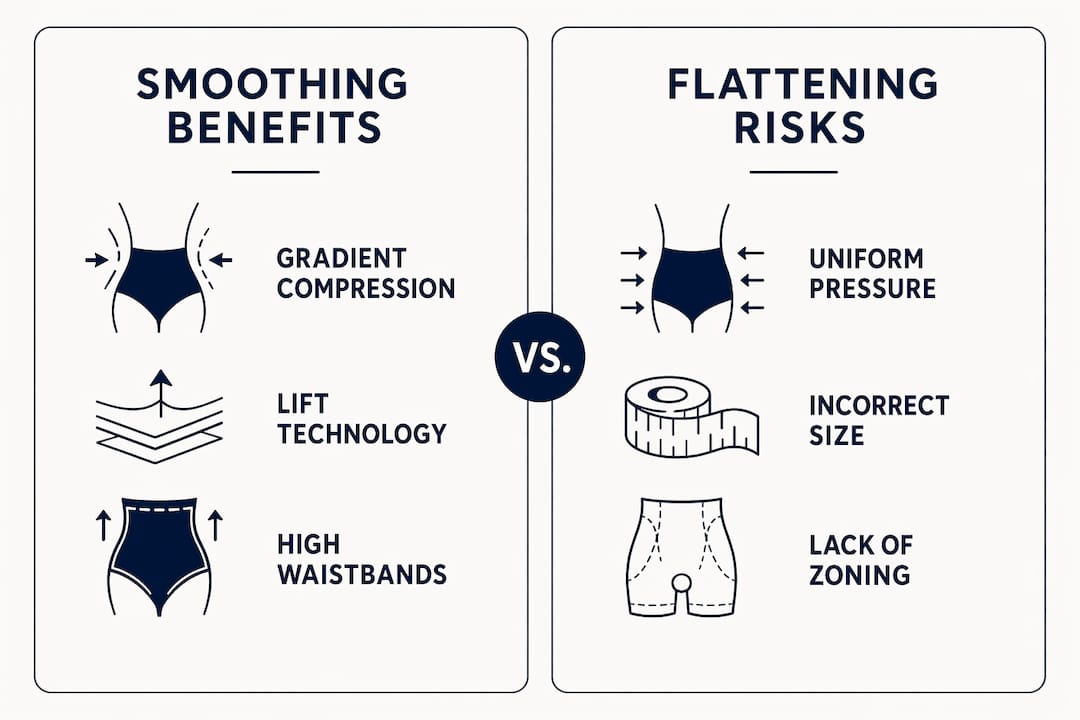
High waistbands reduce bulging and rolling at the top edge of the garment. Firm compression reshapes by working against body contours, while lighter compression smooths and refines appearance. The best smoothing garments combine a firm abdominal panel with a lighter, flexible waistband so the garment stays in place without creating a hard ridge.
How do you choose shapewear for your body shape?
Choosing the right compression level for your body and outfit is the final step in getting a smooth look rather than a flat one. The three standard compression levels each serve a different purpose, and matching them to your needs prevents the most common shapewear mistakes.
- Light compression works best for minor smoothing under fitted dresses or lightweight fabrics. It is the most comfortable option for all-day wear and suits wearers with sensitive skin or those new to shapewear. Light compression enhances your natural silhouette without dramatically reshaping it.
- Medium compression offers the best balance between visible smoothing and comfort. It works for most body shapes and occasions, providing enough support to refine the waist and hips without restricting movement. This is the most versatile level for everyday use.
- Firm compression provides strong reshaping but carries the highest risk of flattening if the garment is not sized correctly or well-engineered. It suits wearers who want significant waist definition for special occasions. Firm compression should always come from a garment with gradient zoning, not uniform pressure.
Selecting styles that support your natural curves rather than forcing flatness is the guiding principle. For an apple body shape, a high-waist brief with a reinforced abdominal panel and flexible hip panels works best. For a pear shape, a mid-thigh shaper with lighter compression at the hips and firmer support at the waist creates balance. For an hourglass shape, a light to medium compression bodysuit maintains curves without over-compressing them. This body shape fit guide covers each shape in more detail.
Key Takeaways
Shapewear smooths when compression is zoned and graduated. Flattening happens when pressure is uniform, the garment is too small, or the fabric lacks lift and sculpting capability.
| Point | Details |
|---|---|
| Compression zoning is the key | Gradient tension across abdomen, hips, and thighs sculpts curves instead of flattening them. |
| Sizing down causes flattening | Choosing a smaller size displaces tissue and creates rolls and bulges at garment edges. |
| Fabric engineering matters | Nylon, spandex, and elastane blends with seamless construction deliver even, comfortable smoothing. |
| Design features define the result | Lift zones, reinforced panels, and high waistbands separate smoothing garments from flattening ones. |
| Match compression level to your need | Light compression smooths daily wear; firm compression reshapes for occasions but requires correct sizing. |
What I’ve learned from years of watching shapewear get it wrong
The most common complaint I hear about shapewear is that it makes the body look stiff or flat rather than natural. After spending years paying close attention to how garments actually perform on real bodies, I can tell you that this complaint almost always traces back to two things: wrong size and poor fabric engineering. Wearers who size down expecting more smoothing get the opposite result every time.
What changed my perspective was seeing how much difference a well-placed lift panel makes. A garment without a seat lift zone flattens the buttocks completely. Add a curved lift panel in the right position, and the same compression level suddenly enhances the silhouette instead of suppressing it. That single design detail is the difference between a garment that looks like a medical device and one that feels like a second skin.
Psychological benefits of well-fitted shapewear also deserve more attention than they get. When a garment fits correctly and smooths naturally, wearers stop thinking about their appearance and start focusing on the moment they are in. That mental shift is real and valuable. Discomfort, on the other hand, keeps your attention locked on the garment all day. Comfort and confidence are not separate benefits. They are the same benefit.
My honest recommendation is to prioritize fabric quality and design features over price or brand name. A well-engineered garment at a mid-range price point will outperform an expensive but poorly designed one every time. And always, always measure yourself before you buy.
— I
Shapewear that actually smooths, at Ilovenichewear
Ilovenichewear carries shapewear selected for comfort, fabric quality, and real smoothing performance. Every style in the collection is chosen with gradient compression and body-friendly design in mind, so you get a natural contour rather than a flat, rigid look.
Whether you need light smoothing for a summer dress or firm support for a special occasion, the Ilovenichewear collection has options matched to your body shape and comfort level. Browse styles designed to move with you, not against you, and find the fit that makes every outfit feel effortless and comfortable.
FAQ
What does shapewear actually do to your body?
Shapewear applies external compression to soft tissue, redistributing it to create a smoother, more refined silhouette. It does not alter body composition or fat; it temporarily reshapes how tissue sits under clothing.
Does shapewear really flatten your stomach?
Shapewear flattens when it uses uniform compression or is sized too small. Well-designed shapewear with gradient compression zones smooths and contours the abdomen rather than pressing it flat.
What is the difference between flattening and smoothing in shapewear?
Flattening forces tissue into a single plane using equal pressure throughout the garment. Smoothing uses zoned compression to redistribute tissue and enhance natural curves while maintaining a comfortable, mobile fit.
How do I know if my shapewear is the wrong size?
Rolling at the waistband, pinching at leg openings, and visible bulges above or below the garment are all signs of incorrect sizing. Improper sizing displaces tissue rather than smoothing it, which creates the exact look you are trying to avoid.
Which compression level is best for everyday smoothing?
Medium compression is the best choice for daily wear. It provides visible smoothing and waist refinement without restricting movement or causing discomfort during extended use.