
Hook eye closure shapewear is defined as a garment that uses rows of interlocking metal or fabric hooks and eyes to fasten and adjust compression around the body. The role of hook eye closure shapewear goes far beyond simple fastening. It gives you real control over how tight or relaxed your garment feels, adapts as fabric stretches over time, and holds its shape through a full day of wear. If you have ever wondered why some shapewear stays put while other styles lose their grip by noon, the closure system is usually the answer.
How do hook eye closures enhance shapewear fit and compression?
Hook eye closures give you adjustable compression that no zipper or snap can match. Standard hook and eye designs in high-quality shapewear include 3 adjustment columns and multiple rows, letting you fine-tune tightness in small increments. That level of control turns a rigid garment into one that works with your body, not against it.
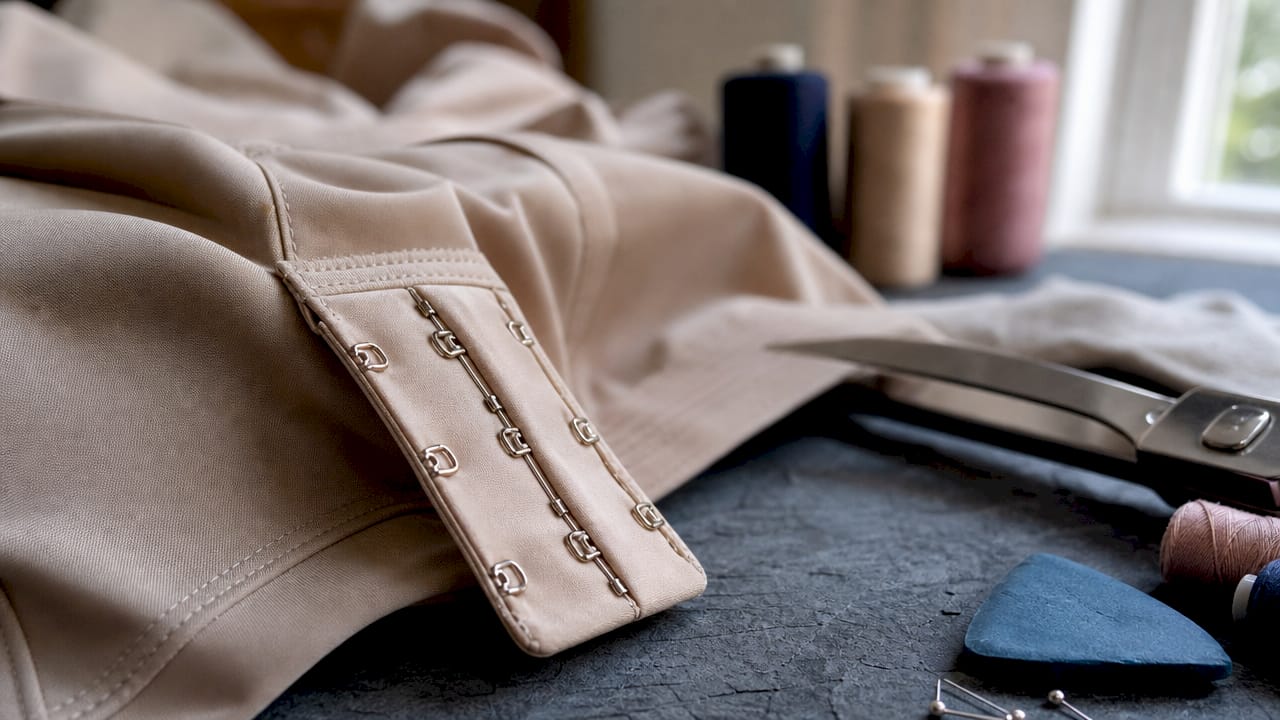
Fabric elasticity loss is a real problem with shapewear. Frequent wear causes 5–10% elasticity loss within 6 months, which means a garment that felt snug in january can feel loose by summer. Multi-row hook closures let you move to a tighter column as the fabric relaxes, preserving the original compression without buying a new piece.
Here is what the multi-row system actually does for your fit:
- Column 1 (loosest): Ideal for the first few wears when fabric is still firm
- Column 2 (middle): The sweet spot for most daily wear after initial break-in
- Column 3 (tightest): Compensates for elasticity loss over months of use
- Incremental adjustment: Each column shifts compression by a small, controlled amount
- Consistent silhouette: You maintain the same shaping effect regardless of fabric age
A high-quality hook and eye closure can extend shapewear lifespan by 3–6 months by allowing these incremental adjustments. That is a meaningful return on what you spend on a quality piece.
Pro Tip: Start on the loosest hook column when your shapewear is new. Move one column tighter every few months as the fabric softens. This “micro-fit” approach keeps compression consistent and avoids the sudden feeling that your garment has given up.
Why are hook eye closures better than snaps or zippers?
Hook eye closures outperform both snaps and zippers when shapewear is under real tension. Zippers have a 25% higher failure rate under the tension loads typical of high-denier shaping fabrics. A failed zipper mid-day is not just inconvenient. It can render the garment unwearable.
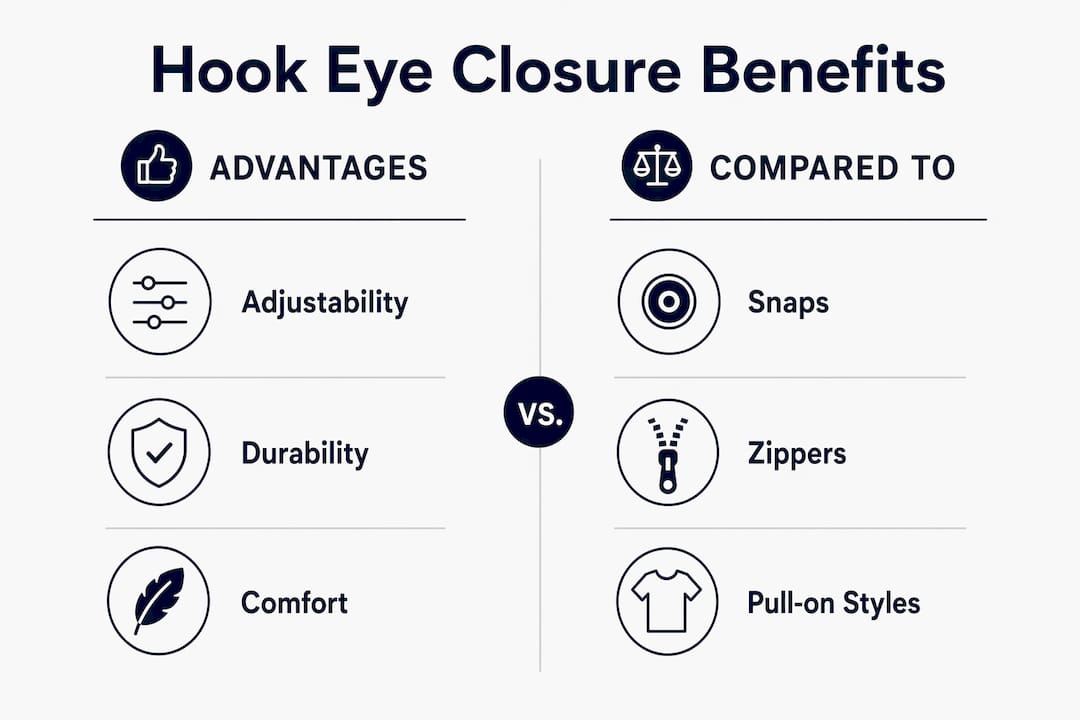
Snaps have their own weakness. Hook and eye closures offer twice the holding security of snap fasteners, preventing the closure from popping open during wear. Snaps rely on a single point of contact, while hook and eye systems distribute tension across multiple interlocking points.
Here is how the three closure types compare in practical terms:
- Hook and eye: Distributes tension across multiple rows, adjustable, holds under sustained compression, low failure rate
- Zipper: Fixed compression, no adjustability, higher failure rate under tension, difficult to repair
- Snap fasteners: Single-point contact, prone to popping open, no incremental adjustment, less secure for all-day wear
Hook and eye gussets in bodysuits and shapewear gowns provide superior comfort and security compared to snaps or zippers, especially for all-day wear or physical activity. The placement of the gusset matters too. A well-positioned hook and eye gusset at the crotch panel keeps the garment anchored without creating pressure points.
“Durability should trump minimalist aesthetics in the closure area. A failed hook and eye closure can render shapewear unusable despite seamless marketing elsewhere on the garment.”
That insight cuts to the heart of why closure quality matters more than most shoppers realize. You can have the most breathable, beautifully constructed shapewear fabric in the world, but if the closure fails, the garment fails with it. Check the shapewear fabric technology alongside the closure system before you buy.
What are common concerns about hook eye closure shapewear?
The most common complaint about hook eye closure shapewear is skin irritation from uncovered hardware. Uncovered metal hooks can cause skin irritation or visible ridges under thin clothing when not covered by soft fabric plackets. This is a design issue, not an inherent flaw of the closure type.
Here is what to check before you buy:
- Fabric plackets: Look for soft fabric panels that cover the hook hardware on the skin-facing side
- Flat profile hooks: Flatter hook designs reduce bulk and lower the chance of visible lines under clothing
- Sizing accuracy: Forcing hook closures due to incorrect sizing causes discomfort, fabric bulges, and difficulty closing
- Hardware placement: Hooks positioned at the back or side panel are less likely to press against sensitive areas
- Visible ridge prevention: Check the avoiding visible lines guide for styling tips that work with hook closures
Sizing is the single biggest factor in comfort. If you have to wrestle the hooks closed, you are wearing the wrong size. A well-fitted garment should close on the loosest column with light effort. If it takes real force, size up and use a tighter column as the fabric breaks in.
Pro Tip: Run your fingers along the inside of the closure panel before purchasing. If you feel exposed metal edges, skip that garment. Soft, padded plackets are a non-negotiable feature for all-day comfort.
How to choose and wear hook eye closure shapewear for the best support
Choosing the right hook eye closure shapewear starts with a fit test, not a size chart. Size charts give you a starting point, but your actual body shape, the garment’s fabric weight, and the compression level all affect how a specific piece fits you.
What to check during a fit test
A proper fit test covers three failure points: the waistband, the straps, and the closure itself. The waistband should lie flat without rolling. Straps should sit without digging into your shoulders. The closure should fasten on the loosest column without pulling the fabric into a ridge or creating a visible bump.
Seamless vs. hook eye closure shapewear
Both styles have a place in your wardrobe, but they serve different needs. The table below breaks down when each option works best.
| Feature | Seamless shapewear | Hook eye closure shapewear |
|---|---|---|
| Adjustability | None | High, via multiple hook rows |
| Longevity | Shorter, no compensation for stretch | Longer, adjusts as fabric loosens |
| Comfort for sensitive skin | Higher, no hardware | Depends on placket quality |
| Best for | Light shaping, smooth silhouette | Firm compression, long wear |
| Ease of dressing | Easier, pull-on style | Slightly more effort, but secure |
The benefits of seamless designs are real for light shaping needs. But when you need consistent, firm compression across a full day, hook eye closure wins on every practical measure.
Daily wear tips to protect your closure
Hook and eye closures last longer with simple care habits. Always fasten the hooks before washing to prevent snagging. Store the garment folded with hooks closed. Avoid machine drying on high heat, which weakens the elastane and forces you to use tighter hook columns sooner. For putting on full-body styles, the full-body shapewear tips walk you through a step-by-step method that protects both the garment and the closure.
What I have learned about hook eye closures after years of shapewear wear
Hook eye closures are the most underrated feature in shapewear, and most people only notice them when they fail. I spent years reaching for pull-on seamless styles because they felt easier to put on. What I did not realize was that I was replacing those garments every few months because they lost compression and never recovered.
The first time I wore a well-made hook and eye closure bodysuit for a full 12-hour day, the difference was obvious. The garment felt the same at 9 PM as it did at 9 AM. That consistency comes directly from the closure system, not the fabric alone.
The irritation concern is real, but it is entirely avoidable. Every piece of hook and eye shapewear I have kept long-term has one thing in common: a thick, soft fabric placket covering the hardware. Garments without that placket get returned. No exceptions.
The myth I hear most often is that hook eye closures look bulky under clothing. With a flat-profile hook and a well-designed placket, there is nothing to see. The visible ridge problem comes from poor construction, not from the closure type itself. Choose well, and the hardware disappears entirely.
— I
Shapewear with hook eye closures at Ilovenichewear
Ilovenichewear carries shapewear built for real wear, not just a fitting room try-on.
The collection at Ilovenichewear includes styles with multi-row hook and eye closures designed for adjustable compression, covered hardware, and all-day comfort. Whether you need firm tummy control, full-body shaping, or a style that works under a fitted dress, you will find options built with the closure quality that actually holds. Sizes run across a wide range so you can start on the right hook column from day one. Browse the full collection and find the fit that works with your body, not just your size tag.
Key takeaways
Hook eye closure shapewear delivers adjustable, durable compression that pull-on and zipper styles cannot replicate, making it the most practical choice for consistent, long-term body shaping.
| Point | Details |
|---|---|
| Adjustability is the core benefit | Three hook columns let you fine-tune compression as fabric stretches over months of wear. |
| Closures extend garment life | A quality hook and eye system adds 3–6 months of useful life by compensating for elasticity loss. |
| Hook eye outperforms snaps and zippers | Zippers fail at higher rates under tension; snaps pop open during activity. |
| Covered hardware prevents irritation | Always check for soft fabric plackets over the hooks before buying. |
| Correct sizing protects comfort | Forcing hooks closed signals the wrong size, not a tight-enough fit. |
FAQ
What is the role of hook eye closure in shapewear?
Hook eye closures provide adjustable, secure fastening that lets you customize compression and maintain consistent shaping as fabric stretches over time. They are the primary reason high-quality shapewear holds its effect longer than pull-on styles.
How many hook rows does quality shapewear have?
High-quality shapewear typically includes 3 adjustment columns with multiple rows of hooks. This gives you incremental control over tightness from the first wear through months of regular use.
Do hook eye closures cause skin irritation?
Uncovered metal hooks can irritate skin and create visible ridges under clothing. Look for garments with soft fabric plackets covering the hardware on the skin-facing side to avoid this issue entirely.
Is hook eye closure shapewear better than seamless styles?
Hook eye closure shapewear is better for firm, long-lasting compression and adjustability. Seamless styles work well for light shaping and sensitive skin but cannot compensate for fabric stretch over time.
How do I know if my hook eye shapewear fits correctly?
The garment should close on the loosest hook column with light effort and no fabric bulging. If closing requires force or creates ridges, size up and use a tighter column as the fabric softens with wear.