
Boning in shapewear is defined as a system of rigid or semi-rigid strips sewn into a garment’s interior to provide structural support, maintain silhouette, and prevent fabric collapse. The role of boning in shapewear goes far beyond decoration. It acts as an internal skeletal frame, the same way a building’s steel beams hold up its walls. Without boning, fitted shapewear would slump, wrinkle, and lose its shaping effect within minutes of wear. The industry term for this construction method is “structural boning,” borrowed directly from corsetry, where it has been used for centuries to control garment shape and body contouring.
How does boning work in shapewear to provide support and shape?
Boning serves three primary structural purposes: it maintains vertical lines to prevent garment slumping, distributes mechanical strain to prevent seam failure, and resists collapse in strapless or tightly fitted designs. Each of these functions works together to keep the garment performing all day.
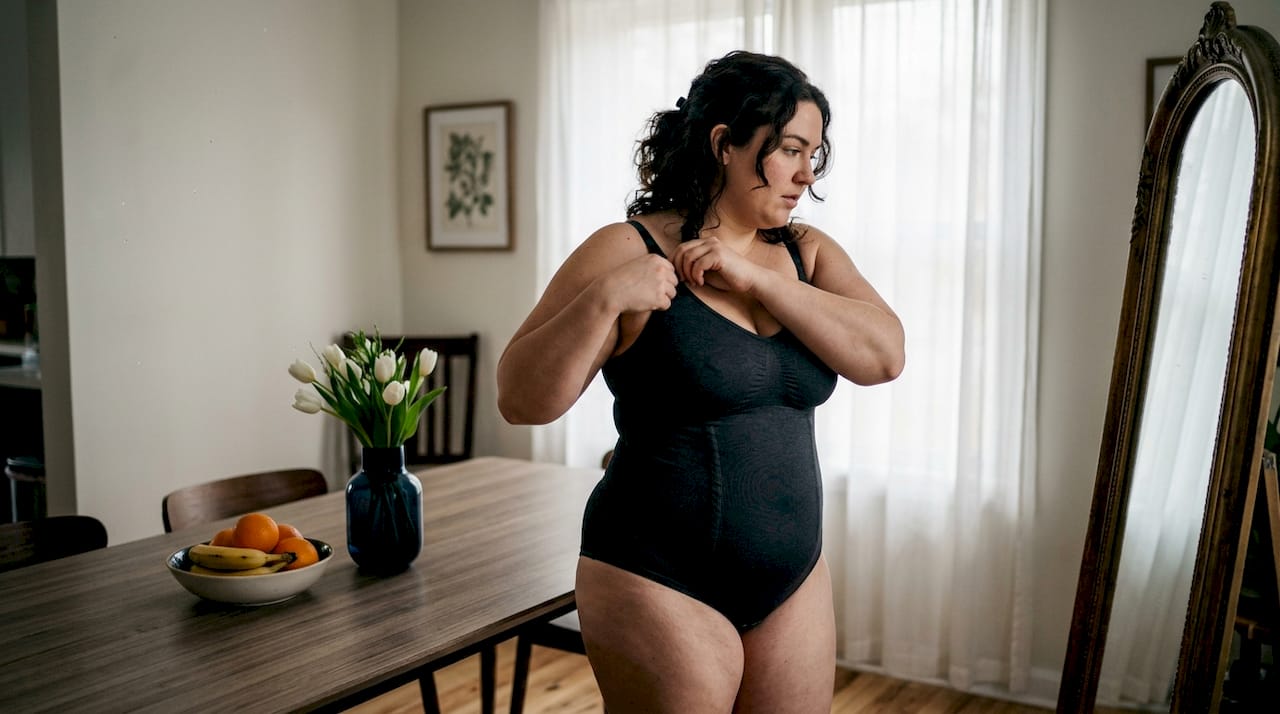
Think of boning as an architectural frame inside your shapewear. It acts as an internal frame that holds the garment’s shape reliably as you move, preventing fabric from dragging downward and maintaining a smooth, upright silhouette. Without this frame, the fabric would bunch at the waist and pull away from the body.
Here is what boning does mechanically inside a shapewear garment:
- Distributes strain away from seams. When you sit, bend, or twist, the garment experiences tension. Boning spreads that tension across a wider area so no single seam bears the full load.
- Maintains vertical alignment. Bones run lengthwise through the garment, keeping panels from shifting sideways or folding inward.
- Resists collapse in strapless styles. Strapless shapewear relies entirely on boning to stay in place. Without it, the garment would roll down within minutes.
- Enables targeted contouring. Bones placed over the tummy panel push fabric inward at specific zones, creating a smoother front profile.
Pro Tip: If your shapewear rolls down at the waist or bunches under clothing, the garment likely has too few bones or bones that are too short for your torso length. Look for styles that specify bone count and placement.
Boning strips vary from 1/8 to 1/2 inch wide depending on the level of support needed. Wider strips provide firmer control, while narrower strips allow more flexibility for everyday movement.
What are the common shapewear boning types and their benefits?
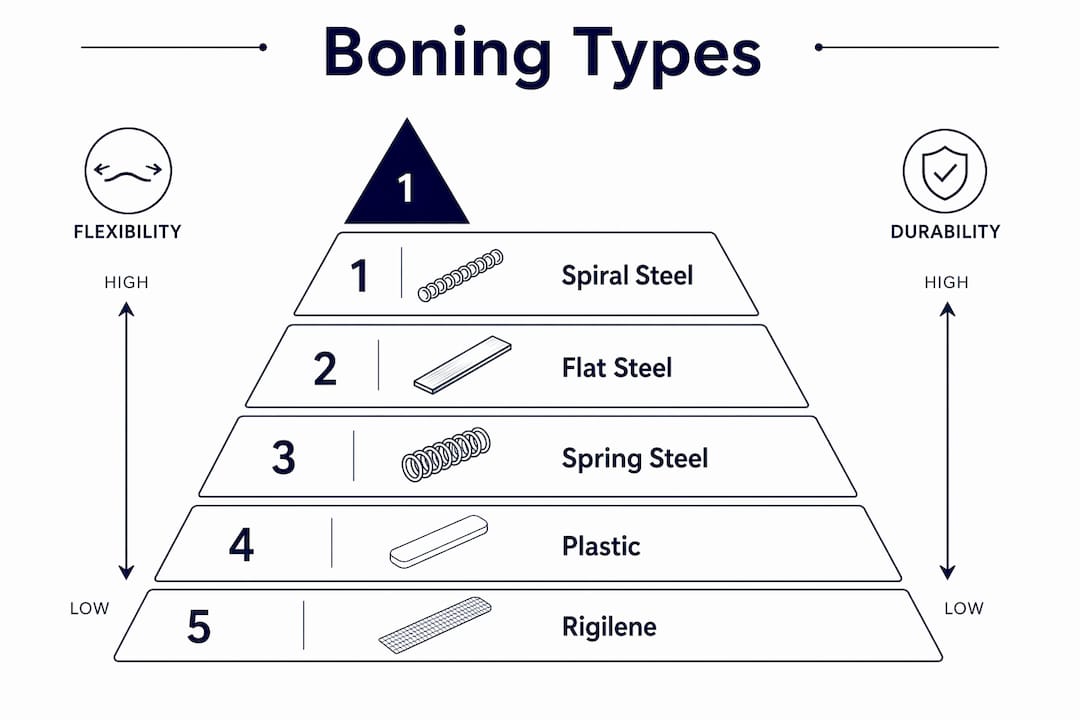
Not all boning materials perform the same way. The three most common types used in shapewear are spiral steel, flat or spring steel, and plastic boning. Each has a distinct feel, durability profile, and best use case.
Spiral steel boning
Spiral steel boning offers premium 4-way flexibility and vertical support, making it the top choice for everyday wear shapewear. It bends in all directions without creasing, which means it moves with your body rather than against it. This material is praised for its strength and comfort combination, making it ideal for garments you plan to wear for long stretches.
Flat and spring steel boning
Metal boning types include flat steel, spring steel, and spiral steel. Flat steel is the most rigid option and works best for waist training or heavy-duty shaping. Spring steel flexes front to back but resists side bending, giving firm vertical support without the full flexibility of spiral steel.
Plastic boning
Plastic boning, made from polyester or nylon, is lightweight, washable, and economical. It suits lighter shapewear garments where moderate support is enough. Plastic boning is lighter and flexible but less durable and not ideal for waist training or high-compression styles. It works well in bridalwear, camisoles, and light-control bodysuits.
Rigilene boning
Rigilene is a sew-through nylon rod boning that stitches directly onto fabric without a casing. It is popular in wedding dresses and strapless garments because it is thin, lightweight, and easy to apply. It provides moderate support and is a good middle ground between plastic and steel.
| Boning type | Flexibility | Durability | Best use |
|---|---|---|---|
| Spiral steel | 4-way | High | Everyday shapewear, corsets |
| Flat steel | Front-back only | Very high | Waist training, heavy shaping |
| Spring steel | Front-back only | High | Structured bodices, firm support |
| Plastic (nylon) | Multi-directional | Moderate | Light control, bridalwear |
| Rigilene | Multi-directional | Moderate | Strapless, sew-through applications |
Pro Tip: For daily wear shapewear, spiral steel is worth the extra cost. It holds its shape through repeated washing and movement without the stiffness that makes rigid plastic boning uncomfortable after a few hours.
How does boning placement affect shapewear performance?
Where bones sit inside a garment matters as much as what they are made of. Strategic placement determines whether shapewear flattens the abdomen, supports the lower back, or stays put during a full day of activity.
-
Front panel placement for tummy control. Bones running vertically through the front panel push fabric inward at the belly zone. A front-heavy bone arrangement creates a flatter abdominal profile without compressing the sides uncomfortably.
-
Back bones for lumbar support. Bones placed along the back panel encourage an upright posture by resisting the fabric’s tendency to fold at the lower back. This is the configuration that gives shapewear its posture-improving reputation.
-
Short bones at the waistband edge. Short bones, typically 8–10cm strips, at the front waistband edge prevent folding or rolling in mid-to-premium shapewear. This detail is what separates garments that stay smooth all day from those that dig in or bunch after an hour.
-
Odd bone counts for symmetrical compression. Bone count and placement directly influence how compression feels. Odd numbers such as 7, 9, 11, 13, or 15 bones allow for a central spine bone that creates symmetrical compression on both sides of the body.
-
Plus-size adjustments. Scaling shapewear to plus sizes requires wider silicone strips and reinforced bone placement to maintain compression and prevent rolling. Standard silicone strips measure 8mm wide, while plus-size versions use 10–12mm strips for a more secure hold. This adjustment keeps the garment anchored without creating pressure points.
The number of bones also affects how a garment feels under clothing. Fewer bones create a softer silhouette with less visible structure, while more bones produce a firmer, more defined shape. For shapewear silhouette correction, the bone count and placement work together with panel design to target specific body zones.
What practical benefits should wearers know about boning in shapewear?
Understanding the benefits of boning in shapewear helps you choose the right garment for your actual needs rather than guessing based on compression level alone.
- Posture improvement. Boning improves posture by encouraging proper body alignment without excessive compression when the garment uses breathable panels and flexible boning. The bones act as a gentle reminder to sit and stand upright, which reduces back fatigue over a long day.
- Garment longevity. Boning distributes stress across the garment’s structure, which means seams and fabric panels experience less wear. A well-boned shapewear piece lasts significantly longer than an unboned alternative under the same conditions.
- Comfort trade-offs. Rigid steel boning delivers the most dramatic shaping but requires a break-in period. Flexible spiral steel and plastic boning feel comfortable from the first wear. If you are new to boned shapewear, starting with a spiral steel or plastic-boned style is a smart move.
- When to choose boned shapewear. Boned styles work best for formal events, long wear days, or when you need consistent shaping under structured clothing. For casual daily wear or light activity, seamless or soft-panel alternatives may feel more comfortable.
- Health and fit considerations. Boning should never cause pain, pinching, or restricted breathing. If a bone digs into your hip or rib, the garment is either the wrong size or the wrong bone length for your torso. Reviewing shapewear health considerations before buying can help you avoid common fit mistakes.
The key distinction to keep in mind: flexible boning supports and shapes without aggressive compression, while rigid boning is for intense shaping goals. Matching the boning type to your lifestyle makes all the difference in whether you actually wear the garment.
Key Takeaways
Boning is the structural backbone of effective shapewear, and choosing the right type, placement, and bone count determines both comfort and shaping results.
| Point | Details |
|---|---|
| Boning’s core function | Boning maintains vertical shape, distributes strain, and prevents garment collapse during wear. |
| Best material for daily wear | Spiral steel boning offers 4-way flexibility and durability, making it ideal for everyday shapewear. |
| Placement drives performance | Front bones flatten the abdomen; back bones support posture; short waistband bones prevent rolling. |
| Plus-size design differences | Wider silicone strips (10–12mm) and extra bones maintain compression and fit in larger sizes. |
| Comfort vs. shaping trade-off | Flexible boning suits daily comfort; rigid steel is for intense shaping and waist training goals. |
Why boning deserves more credit than it gets
Most people shopping for shapewear focus on compression level and fabric feel. Boning rarely comes up in the conversation, and that is a real gap. After spending years looking closely at how garments are constructed, I am convinced that boning is the single most underappreciated factor in shapewear quality.
The common misconception is that boning means stiffness and discomfort. That idea comes from outdated rigid plastic boning that did feel uncomfortable. Modern spiral steel boning is a completely different experience. It moves with you, holds its shape through a full day, and does not crease or poke the way older materials did.
What I find most interesting is how boning placement reveals the quality of a garment’s design. A shapewear piece with thoughtfully placed bones at the waistband edge, a central spine bone, and reinforced back panels tells you the designer understood how bodies actually move. A garment with two bones sewn into the side seams and nothing else tells you the opposite.
My honest advice: before you buy, check whether the product description mentions bone count, bone type, or placement. Brands that share those details are the ones that take construction seriously. If that information is not listed, ask. The answer will tell you a lot about the garment before it arrives at your door.
For a deeper look at how panels and boning work together, the guide on shapewear panels and fit is worth reading alongside this one.
— I
Boned shapewear worth wearing, at Ilovenichewear
Good boning construction is not easy to find at a fair price. Ilovenichewear carries a range of shapewear designed with the structural details that actually matter, including styles with spiral steel boning for flexible everyday support and configurations built for different body types.
Whether you want light control for a workday or firm shaping for a special occasion, the full shapewear collection at Ilovenichewear has options built with real garment construction in mind. Each style is selected for comfort, support, and wear that holds up through a full day. Free shipping on all orders makes it easy to try a new style without the risk.
FAQ
What is the role of boning in shapewear?
Boning provides structural support inside shapewear by maintaining vertical shape, distributing mechanical strain, and preventing the garment from collapsing or rolling during wear.
What type of boning is most comfortable for everyday shapewear?
Spiral steel boning is the most comfortable option for daily wear because it flexes in four directions, moves with the body, and holds its shape without creasing or poking.
How does boning placement affect tummy control?
Bones placed vertically through the front panel push fabric inward at the abdomen, creating a flatter profile. A front-heavy bone arrangement delivers the most noticeable tummy control.
Does boning in shapewear improve posture?
Yes. Back-panel boning encourages proper spinal alignment by resisting fabric collapse at the lower back, which reduces fatigue and supports an upright posture throughout the day.
Is boned shapewear suitable for plus sizes?
Boned shapewear works well for plus sizes when the garment uses wider silicone strips (10–12mm) and reinforced bone placement to maintain even compression and prevent rolling at the waistband.